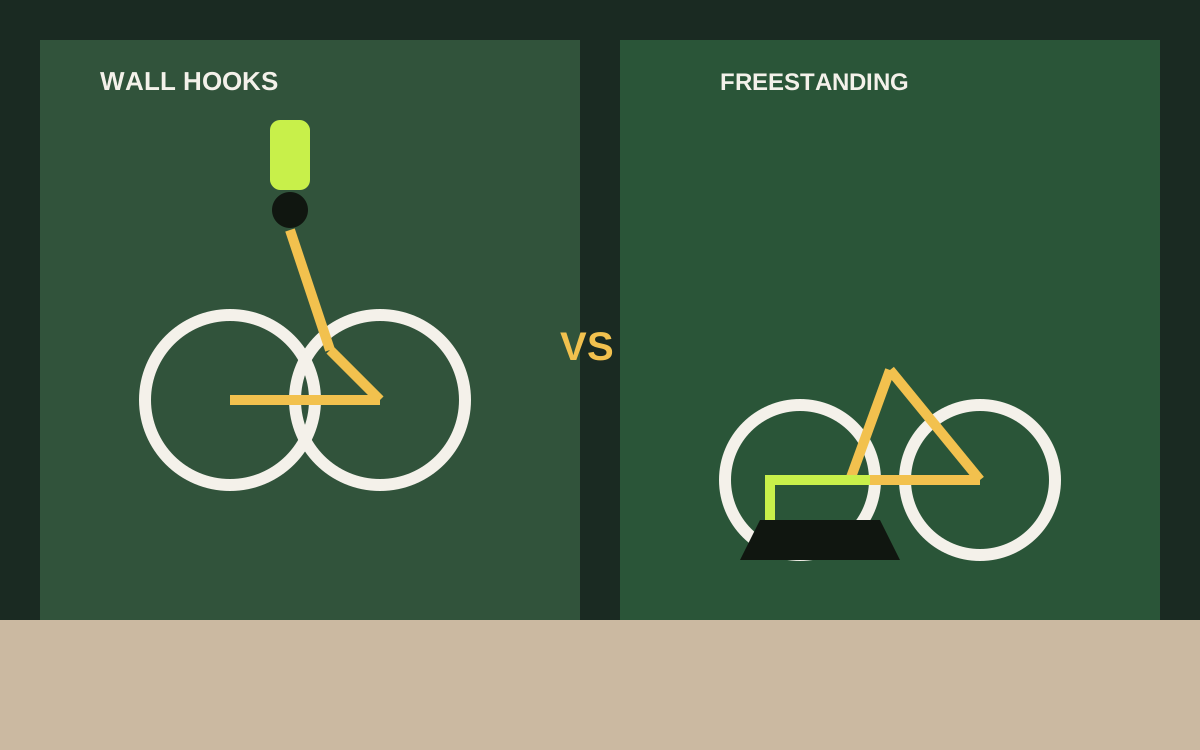
Under $50, stud-mounted bike hooks usually win when you can hit real structure and want maximum clear floor; a freestanding stand wins when drilling is off-limits, the bike is awkward to lift, or you need a portable park. There is no universal champion — structure access and lift ability decide it.
Compare bike wall hooks and freestanding stands on Amazon
Who this is for
- Cyclists choosing between stud hooks and a floor stand under $50
- Renters who cannot drill and need a clear winner without wall damage
- Garage owners who already read our bike how-to and want the hooks-versus-stand decision framed
Quick answer
Under $50, stud-mounted bike hooks usually win when you can hit real structure and want maximum clear floor; a freestanding stand wins when drilling is off-limits, the bike is awkward to lift, or you need a portable park. There is no universal champion — structure access and lift ability decide it.
Quick comparison
| Factor | Wall-mount hooks | Freestanding stand | Edge |
|---|---|---|---|
| Clear parking lane | Best when studs are solid | Usually $15-$35 hooks | Hooks win |
| No-drill / rental limits | Not safe for adult bikes | Usually $20-$50 | Stand wins |
| Daily grab for light bikes | Fast if height is right | Usually stands vary | Slight edge to good hooks |
| Heavy / awkward lift | Risky if undersized | Usually more stable park | Stand often safer |
What to look for
Structure access first
Hooks only win if they land in studs or solid masonry with a rating above the bike weight. No studs means the stand wins by default.
Floor space versus wall strength
Hooks trade wall integrity for open parking lanes. Stands spend footprint but leave drywall untouched.
Lift ability
Vertical hooks demand a safe lift every ride. If that motion is a strain, favor a stand or a lower horizontal stud mount.
Portability and guests
Stands move with seasonal bikes and visitors. Hooks are fixed once installed correctly.
Clear winner criteria
Choose wall-mount hooks when…
You verified a stud, the hook rating clears your bike weight with margin, you can lift the bike safely, and car-door clearance checks out. Follow our stud-safe how-to for the install.
Choose a freestanding stand when…
You cannot drill, the stud finder is ambiguous, the bike is heavy or an e-bike outside casual hook ratings, or you need a movable tune-up park.
Choose both when…
Hang the daily rider on a proven stud hook and keep a stand for guest bikes, kids’ bikes, or workshop sessions.
Side-by-side realities
Failure modes
A missed stud turns a hook into a drywall disaster. A cheap stand tips on slick epoxy if geometry is wrong. Buy for the failure you refuse to accept.
Budget honesty
One quality stud hook under $50 often beats two decorative hooks. Stands vary widely — check wheel size and weight ratings, not lifestyle photos.
Overlap with related guides
Our wall-mount rack versus freestanding stand guide covers racks broadly; this piece focuses on hooks specifically and the win conditions for each.
Treat price bands as moving targets
Ratings and kit contents change with sales. Verify live weight limits, tire fit, and price on the retailer page before ordering.
How to decide in five minutes
Can you hit a verified stud?
If no, stand wins. If yes, continue.
Can you lift the bike onto the planned hook height?
If no, stand or a lower horizontal stud mount wins.
Does a full car-door swing still clear bars and pedals?
If no, relocate or choose a stand elsewhere.
Is the bike an e-bike or loaded cargo bike?
Read ratings twice. Many under-$50 hooks are not enough — stand or a purpose-rated mount.
Mistakes to avoid
- Calling adhesive or drywall-anchor hooks a “wall mount win.”
- Buying a freestanding stand that tips on smooth garage epoxy.
- Ignoring handlebar width until the first scraped car door.
- Assuming every under-$50 hook fits fat tires or e-bike weight.
- Skipping the stud-safe install checklist once you choose hooks.
Related guides
Browse the hub: Garage wall storage under $50 - all guides
Related hub: Apartment no-drill storage under $50 — closest match when drilling is forbidden and a freestanding stand is the practical winner.
- How to Hang a Bike on a Garage Wall Under $50 (Stud-Safe Hooks)
- Wall-Mount Rack vs Freestanding Stand for Bikes Under $50
- Best Bike Hooks for Garage Ceilings Under $50
- Best E-Bike Wall Mounts Under $50 for Garage (No-Lift Hooks for Heavy Bikes)
- Vertical vs Horizontal Bike Wall Mounts: Which Under-$50 Setup Fits Your Garage?
- Best No-Drill Bike Storage for Apartments Under $50 (Freestanding & Tension-Pole Racks)
FAQ
Do wall-mount bike hooks beat a freestanding stand under $50?
Hooks win when studs are verified and floor space matters most. A freestanding stand wins when you cannot drill, cannot lift safely, or need portability.
Are bike hooks safe in a garage?
Yes when screwed into studs or masonry with a rating above the bike weight and clear of doors. They are not safe on drywall anchors or adhesive.
What should renters choose?
Usually a freestanding stand. Ask before drilling; if permission is denied, do not improvise with adhesive hooks for an adult bike.
Where can I see the stud-safe install steps?
See our how-to on hanging a bike with stud-safe hooks, linked below, before you drill.
Bottom line
Under $50, wall-mount bike hooks win on clear floors only after studs, ratings, lift ability, and door clearance all pass. Otherwise the freestanding stand is the honest winner. Choose the option that survives your garage’s real constraints — not the one that looks tidier in a catalog photo.