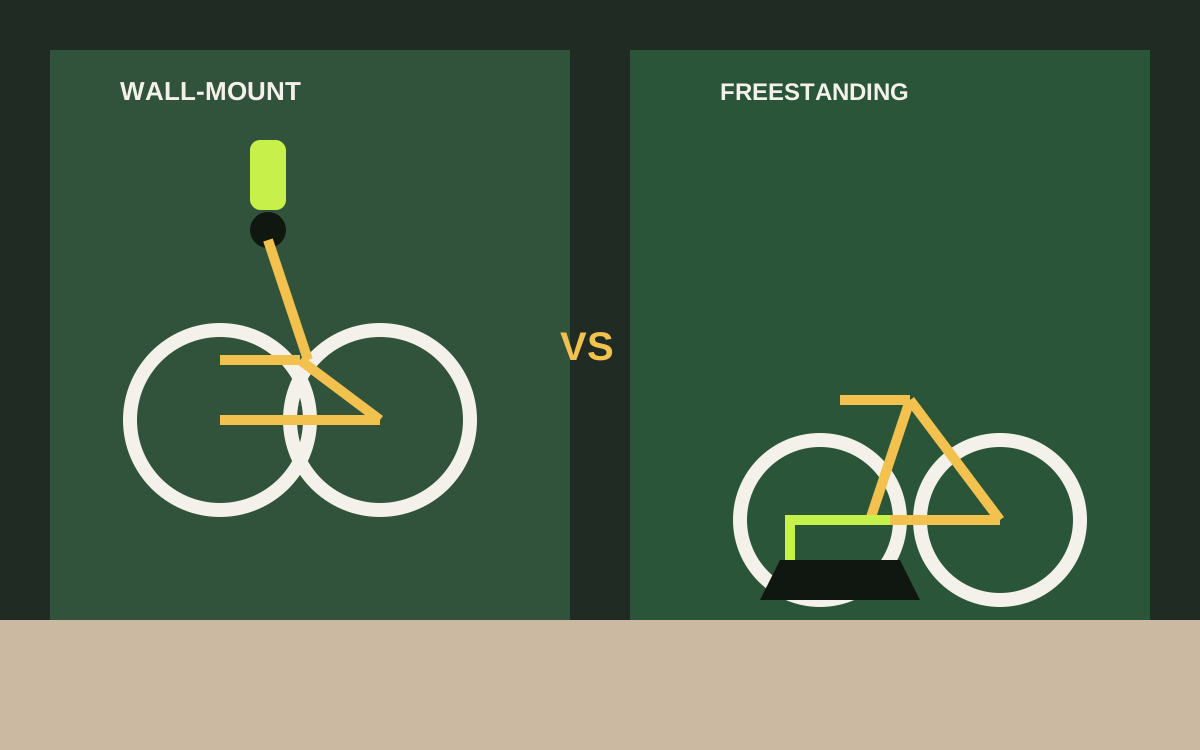
Under $50, a wall-mount bike rack or hook usually wins when you can hit studs and want maximum clear floor; a freestanding stand wins when you cannot drill, move bikes often, or need a temporary parking spot that travels with the bike. Choose based on wall access and how often the bike leaves the house.
Compare bike wall mounts and freestanding stands on Amazon
Who this is for
- Cyclists reclaiming a one- or two-car garage floor
- Renters who cannot drill and need a moveable bike stand under $50
- Homeowners deciding whether stud hooks beat a floor stand for daily bikes
Quick answer
Under $50, a wall-mount bike rack or hook usually wins when you can hit studs and want maximum clear floor; a freestanding stand wins when you cannot drill, move bikes often, or need a temporary parking spot that travels with the bike. Choose based on wall access and how often the bike leaves the house.
Quick comparison
| Factor | Wall-mount rack | Freestanding stand | Edge |
|---|---|---|---|
| Clear parking lane | Frees the floor when mounted well | Usually $15-$40 | Wall-mount wins |
| No-drill / rental limits | Needs fasteners into structure | Usually $20-$50 | Freestanding wins |
| Quick daily grab | Strong if height is right | Usually stands vary | Slight edge to good wall hooks |
| Moving or seasonal bikes | Fixed once installed | Usually portable | Freestanding wins |
What to look for
Floor space is the real currency
Wall mounts trade wall strength for open parking lanes. Freestanding stands keep the wall pristine but spend footprint you may need for a car door or walkway.
Structure beats optimism
A loaded adult bike on a wall hook needs studs or solid masonry and a rating with margin. Drywall anchors and adhesive are the wrong bet for hanging bikes.
Daily motion matters
If you ride most days, a quick-release wall hook or vertical mount at grab height can be faster. If guests, kids, or seasonal bikes rotate in, a freestanding stand is easier to reposition.
Clearance includes pedals and bars
Measure handlebar width, pedal stick-out, and door arcs before choosing either system. A “compact” stand that blocks a bumper is not compact in practice.
Clear winner criteria
Choose a wall-mount rack when…
You can screw into studs or masonry, want the bike off the floor, and can keep handlebars and pedals clear of car doors. Vertical hooks and simple arm racks both qualify if rated for the bike weight.
Choose a freestanding stand when…
You rent, cannot drill, move between spaces, or need a stable park for tuning and cleaning without committing holes to one wall.
Choose a hybrid when…
Hang the daily rider on a stud-mounted hook and keep a freestanding stand for guest bikes, kids’ bikes, or workshop sessions.
Side-by-side realities
Stability
A well-anchored wall mount does not tip. Freestanding stands depend on geometry and floor surface — watch slick epoxy and uneven slabs.
Install effort
Wall mounts need locating studs, leveling, and a load test. Freestanding stands usually assemble faster and relocate without patching holes.
Theft and bump risk
Wall mounts keep bikes out of casual foot traffic. Floor stands can be knocked by doors, pets, or rolling bins if placed poorly.
Treat price bands as moving targets
Hook styles, stand designs, and ratings change with sales. Verify live weight ratings, tire compatibility, and price on the retailer page before ordering.
How to decide under $50
Check the wall first
No solid mounting surface usually means freestanding. Solid studs usually mean wall-mount for floor recovery.
Weigh the bike honestly
E-bikes and loaded cargo bikes often exceed casual hook ratings and may need a different plan than a light road bike.
Mock the swing path
Open the car door, walk the path, and tape the bike outline. Whichever option survives that test without drama is the winner.
Buy rated hardware once
One correctly mounted hook beats two bent decorative hooks. For stands, confirm wheel size and whether the design suits your fork or tire width.
Mistakes to avoid
- Hanging an adult bike from drywall anchors or adhesive hooks.
- Ignoring handlebar width until the first scraped car door.
- Buying a freestanding stand that tips on smooth garage epoxy.
- Mounting a wall hook so high that lifting the bike becomes a strain.
- Assuming every “bike rack” under $50 fits fat tires or e-bike weight.
Related guides
Browse the hub: Garage wall storage under $50 - all guides
Related hub: Apartment no-drill storage under $50 — closest match when drilling is off-limits and a freestanding stand is the practical path.
- Best Bike Hooks for Garage Ceilings Under $50
- Best Freestanding Bike Stands for Garages Under $50 (No Wall Mounting)
- Helmet Hook vs Shelf for Garage Storage: Best Under-$50 Choice
- Vertical vs Horizontal Bike Wall Mounts: Which Under-$50 Setup Fits Your Garage?
FAQ
Is a wall-mount bike rack better than a freestanding stand under $50?
If you can mount into studs and need clear floor space, wall-mount usually wins. If you cannot drill or need portability, a freestanding stand is the better under-$50 choice.
Can I hang a bike on drywall alone?
Not safely for an adult bike. Use studs or solid masonry with hardware rated above the bike weight, including dynamic lifting loads.
Do freestanding stands work for e-bikes?
Only if the stand’s rating and geometry explicitly support the weight and wheel size. Many budget stands are built for lighter acoustic bikes.
What is the best option for a rental garage?
A freestanding stand avoids holes. If the landlord allows stud mounts, a single rated wall hook can still be worth requesting permission for.
Bottom line
Under $50, wall-mount racks win when studs are available and floor space is precious; freestanding stands win when portability or no-drill rules matter more. Measure clearance, respect weight ratings, and pick the option that survives a real car-door swing test in your garage.