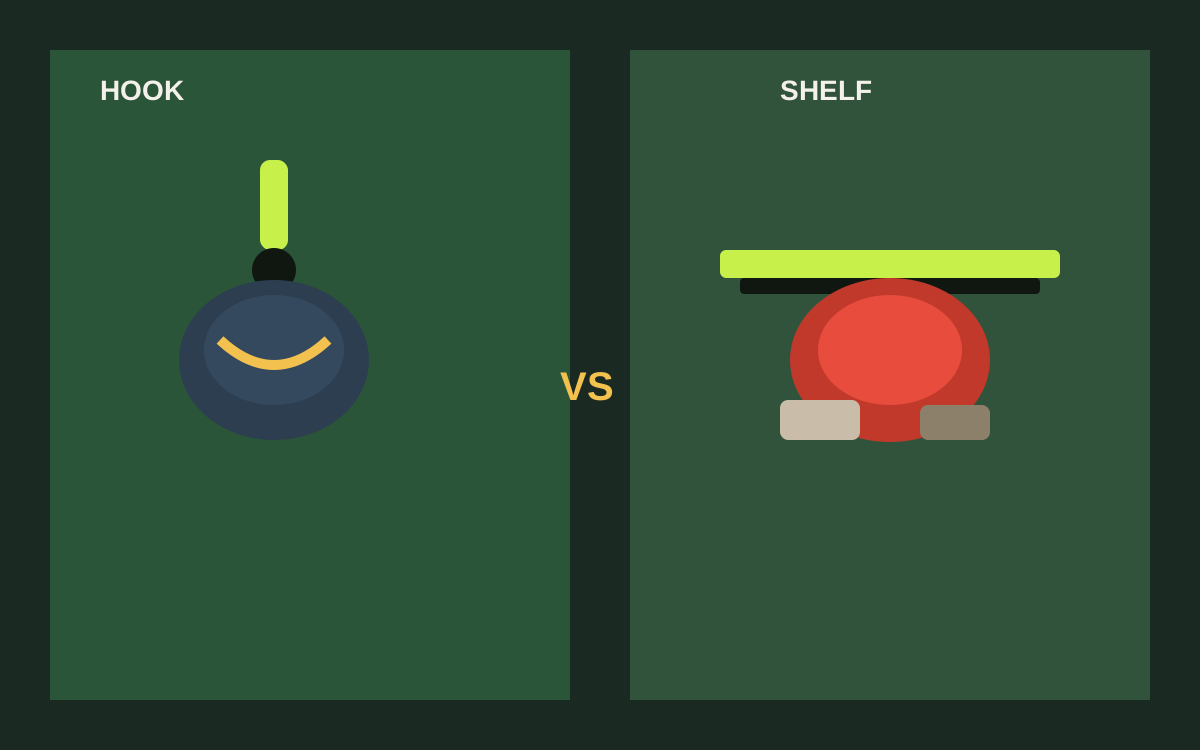
Under $50, a stout coated helmet hook usually wins when you only need a secure, visible hang for one or two lids; a small wall shelf wins when you also store gloves, a communication unit, or a second helmet flat without crushing the liner. Many garages do best with a hook for daily grab-and-go and a short shelf for overflow gear.
Compare helmet hooks and shelves on Amazon
Who this is for
- Riders who want a motorcycle or bike helmet off a chair and out of harm’s way
- Garage owners choosing between a single hook and a small wall shelf under $50
- Anyone storing a helmet plus gloves, a jacket, or a second lid on the same wall
Quick answer
Under $50, a stout coated helmet hook usually wins when you only need a secure, visible hang for one or two lids; a small wall shelf wins when you also store gloves, a communication unit, or a second helmet flat without crushing the liner. Many garages do best with a hook for daily grab-and-go and a short shelf for overflow gear.
Quick comparison
| Factor | Helmet hook | Wall shelf | Edge |
|---|---|---|---|
| Daily one-helmet hang | Fast grab, minimal footprint | Usually $10-$25 | Hook wins for speed |
| Helmet plus gloves or comms | Needs flat staging space | Usually $20-$40 | Shelf wins for kit |
| Two lids on one bay | Possible with dual hooks | Usually $15-$45 | Hook pair often cheaper |
| Finish and liner care | Coated hook or ball tip | Usually hardware varies | Shelf if you hate hook marks |
What to look for
Protect the liner and shell
A hook should support the helmet without pinching the EPS liner or scraping the finish. A shelf should be deep enough that the helmet cannot roll off, with a lip or non-slip mat when the wall gets bumped.
Match daily habits, not showroom photos
If you hang the helmet every ride and grab it one-handed, a hook is faster. If you stage gloves, a lock, and a spare lid together, a shelf reduces the scramble.
Mount for real weight and yanking
Helmets are awkward levers when you pull them off a wall. Prefer studs for both hooks and shelves. Adhesive is for light décor, not a full-face lid you yank after a cold commute.
Keep clearance honest
Measure door swing, bike lean, and jacket bulk. A perfect shelf that eats the walkway is worse than a simple stud hook in the right spot.
Clear winner criteria
Choose a helmet hook when…
You store one primary lid, want the fastest hang after a ride, and can hit a stud with a coated, rounded hook rated above the helmet weight. Add a second hook for a spare rather than overcrowding one peg.
Choose a wall shelf when…
You regularly stage gloves, a neck warmer, a communicator, or a second helmet flat; you want less point contact on the liner; or the wall already has a short shelf run you can dedicate.
Choose both when…
The bay is wide enough. Put the daily helmet on a hook at grab height and use a narrow shelf above or beside it for soft goods that otherwise end up on a car seat.
Side-by-side realities
Speed versus staging
Hooks win the “helmet off, keys in pocket” moment. Shelves win the “everything for tomorrow’s ride in one place” moment. Pick the friction you actually feel.
Contact on the helmet
A ball-tip or thick coated hook spreads load better than a skinny nail. A shelf avoids a single pressure point but needs a lip or pad so vibration does not walk the lid off.
Weight and wall type
Full-face motorcycle helmets belong on mechanical fasteners into studs or masonry. Bike helmets are lighter, yet daily yanking still punishes weak adhesive.
Treat price bands as moving targets
Typical under-$50 bands shift with packs and finishes. Verify live ratings, depth, and price on the retailer page before you order.
How to decide in five minutes
Count what must live on the wall
Helmet only, or helmet plus soft kit? That single inventory step usually picks the winner.
Mock the hang height
Hold the helmet where you would mount it. Confirm you can lift it without a stool and without hitting a shelf edge or bike mirror.
Buy rated hardware once
A cheap decorative hook that bends is more expensive than one stout coated hook. For shelves, use all supplied screws into structure.
Leave a drop zone
Keep the floor clear under the mount so a bumped helmet has somewhere safe to go.
Mistakes to avoid
- Hanging a heavy full-face helmet from a thin adhesive hook.
- Using a sharp, uncoated hook that digs into the liner or strap.
- Mounting a shallow shelf with no lip where door slam vibration is common.
- Parking the helmet where a car door or handlebar can strike it.
- Assuming any “helmet” product photo proves the mount fits your shell shape.
Related guides
Browse the hub: Garage wall storage under $50 - all guides
Related hub: Apartment no-drill storage under $50 — only relevant for light adhesive bike-helmet décor loads, not daily motorcycle lids.
- Best Motorcycle Helmet Wall Mounts Under $50
- Best Bike Hooks for Garage Ceilings Under $50
- Best Baseball Bat Racks Under $50 for Garage Walls
FAQ
Is a helmet hook or a shelf better for garage storage under $50?
A coated stud-mounted hook is usually best for one daily helmet. A small wall shelf is better when you also store gloves or a second lid flat. Many riders use both in the same bay.
Will a wall hook damage my motorcycle helmet?
A skinny or sharp hook can mark the liner or shell. Prefer a rounded, coated hook, hang by the D-ring or a manufacturer-approved method when specified, and avoid crushing the EPS against a tight peg.
Can I mount a helmet shelf on drywall alone?
Only for a very light bike helmet with rated anchors and light use. A motorcycle helmet and daily yanking belong on studs or solid masonry.
Where should a garage helmet mount go?
On a clear wall near the bike or entry, at a comfortable lift height, away from door swing, heat sources, and bumper strike zones.
Bottom line
Under $50, choose the mount that matches how you end a ride. A stout coated hook is the clean winner for one grab-and-go helmet; a short shelf wins when soft kit and a second lid need a flat stage. Screw into structure, protect the liner, and keep the bay clear of doors and handlebars.