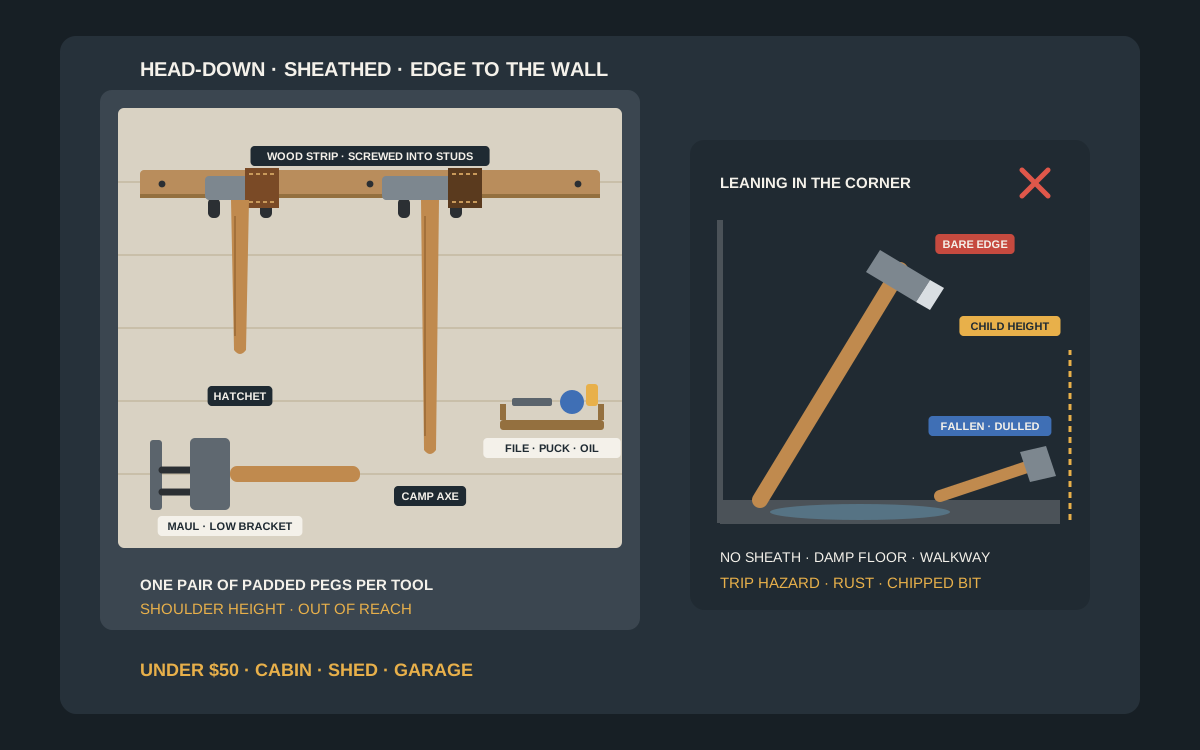
A camp hatchet and a full-size axe are two of the most useful tools you can own for a fire pit, a cabin or a car-camping kit, and two of the worst things to leave leaning in a corner. Propped against the wall they fall over, nick the floor, dull against concrete and sit at exactly the height a child or a dog will walk into. Under $50 buys a far better home: a pair of padded pegs, a two-arm bracket or a small rail that holds each tool head-down, sheath on, edge facing the wall, screwed into a stud. This guide compares the formats, explains how to size them to your tools, and covers sheaths, rust and safe placement so the setup works for years.
Shop axe wall holders on Amazon
Who this is for
- Campers and cabin owners with a hatchet, a camp axe or a splitting maul that currently lives in a corner, a bucket or the car boot
- Garage and shed owners who want striking tools stored safely alongside the rest of their camping gear
- Parents and pet owners who want sharp edges covered and mounted out of reach
Quick answer
For most people, the best under-$50 setup is a pair of padded or rubber-coated pegs, or a two-arm tool bracket, screwed into a stud or a wood strip at shoulder height or higher. Hang each axe or hatchet by its head with the handle pointing down and the edge turned toward the wall, and keep the sheath on every time it goes back up. Heavy splitting mauls belong on a deeper bracket closer to the floor, never on adhesive hooks. A small shelf or bin beside the rack keeps a file, a sharpening puck and a rag with the tools. Check the listing’s current size, weight rating and price before you buy.
Quick comparison
| Format | Best for | Mounting | Trade-off |
|---|---|---|---|
| Two-peg holder | One hatchet or axe hung by the head | Two screws into a stud or wood strip | Simple and cheap; peg gap must match the tool |
| Two-arm tool bracket | A full-size axe or splitting maul | Screwed into a stud | Takes heavy heads; sticks out further from the wall |
| Gun-rack style rail | Two to four axes, hatchets and saws in a row | Screwed across two or more studs | Tidy display for a collection; needs wall width |
| Coated utility hooks | A sheathed hatchet hung by a lanyard hole or sheath strap | Screwed into wood | Cheap and flexible; tool can swing if bumped |
| Pegboard axe hooks | A hatchet on an existing pegboard wall | Locking pegboard hooks | Uses existing board; check board and hook rating |
| Wall shelf with lip | Sharpening file, puck, oil and spare sheaths | Brackets into studs | Keeps upkeep kit together; not for the tools themselves |
Axe & tool wall racksHeavy-duty storage hooksLeather axe sheathsAxe sharpening pucks
What to look for
Head-down hanging with the edge covered
The safest way to store an axe on a wall is hanging from the head, handle down, so the weight sits low and the tool cannot tip. Turn the bit toward the wall and keep a sheath or edge guard on it. If a tool came without a sheath, a leather or nylon sheath sized to the head is an inexpensive add-on, and it protects the edge from knocks as much as it protects hands.
Spacing that fits the head, not just the handle
Two-peg holders work by catching the head on either side of the handle, so the gap between pegs needs to be wider than the handle and narrower than the head. Measure the handle just below the head and the length of the head itself before you buy, and allow for the sheath. Hatchet heads are small, so a holder sized for a felling axe may let a hatchet slip through.
Weight rating and solid fixing
A hatchet is light, but a full-size axe and especially a splitting maul are heavy and concentrate that weight in a small spot. Check the holder’s published weight rating, and screw it into a stud, a solid timber wall or a wood strip fixed across studs. Drywall anchors on their own are a poor fit for striking tools that get lifted off and put back hard.
Padding that will not trap moisture
Rubber or vinyl-coated pegs stop steel scraping steel and hold the head quietly. Avoid foam or fabric padding that stays damp against the steel, and let a wet tool dry before it goes on the wall. Bare steel heads benefit from a light wipe of oil before long storage.
Placement out of reach and out of the way
Mount the rack high enough that small children cannot reach the edges and away from doorways and walkways, where a handle sticking out becomes a hazard. Keep the tools clear of the car’s path in a garage and away from the fire pit in a cabin, where heat dries handles out.
Two-peg vs bracket vs rail vs hooks vs pegboard
When a two-peg holder is the best all-rounder
For a single hatchet or camp axe, two padded pegs screwed into a stud are hard to beat. The head rests on the pegs, the handle hangs between them, and the tool comes off with one lift. Space the pegs just wider than the handle under the head, and fit one pair per tool so you can see at a glance what is missing.
When a two-arm bracket is worth the extra depth
Full-size felling axes and splitting mauls have bigger, heavier heads. A deeper two-arm bracket, the kind sold for long-handled garden tools, cradles the head more securely. It sticks out further from the wall, so put it in a corner or above a bench rather than beside a walkway.
When a rail suits a small collection
If you own several axes, hatchets and a folding or bow saw, a gun-rack style rail or a row of paired pegs on a wood strip keeps them in one tidy line. Leave a hand’s width between heads so you can lift one without knocking the next, and mount the rail high enough that the longest handle hangs clear of the floor.
When hooks are enough
A light hatchet with a lanyard hole in the handle, or a sheath with a sturdy belt loop, can hang from a single coated screw-in hook. It is the cheapest option, but the tool can swing when bumped, so keep it to low-traffic walls.
When pegboard works
If your garage already has a pegboard tool wall, a pair of long locking pegboard hooks can hold a hatchet. Check both the board and the hooks for their rating, and keep heavy axes and mauls on a stud-mounted bracket instead. Our camping mallet and stake holder guide covers the smaller striking tools that share the same wall well.
Sheaths, edges and rust
Keep a sheath on every edge
A sheath or edge guard protects hands reaching past the rack and keeps the bit from chipping against the wall or another tool. If the original sheath is lost, buy one sized for the head length and bit shape rather than a generic one that slides off.
Let tools dry before they go up
Axes often come back from a trip wet from rain, dew or green wood. Wipe the head and handle, let them dry, then sheath and hang. A wet leather sheath left on steel for weeks invites rust under the leather.
A light coat of oil for long storage
Before storing for the off-season, wipe bare steel with a thin coat of oil and treat wooden handles with an oil suitable for tool handles, following the product’s directions. Store away from a furnace, stove or fire pit, where heat can dry and loosen a wooden handle in its head.
Keep the upkeep kit next to the tools
A small lipped shelf or bin beside the rack holds a file, a sharpening puck, a rag and the oil, so a quick touch-up happens before the tool goes back on the wall instead of never.
Installing the holder so it stays put
Find a stud or add a wood strip
Use a stud finder or tap test to locate studs, or screw a solid wood strip across two studs first and mount the holders to the strip. That spreads the load and lets you place pegs exactly where each tool needs them. Pre-drill hardwood strips to avoid splitting.
Set the height
Hang hatchets and axes at shoulder height or above so edges sit well out of reach of small children, with handles ending clear of the floor. Keep mauls lower on a deeper bracket so you are not lifting a heavy head above your head.
In cabins and log walls
On solid timber or log walls, screws go straight into the wood. Check the wall for wiring routes before drilling, and choose screws long enough to bite into solid timber, not just the finish layer.
In vans and trailers, keep axes in the bag
Wall racks suit a garage, shed or cabin. In a moving vehicle a hatchet should travel sheathed in a closed bin or bag, strapped down, rather than hanging where a hard stop can throw it. Our camping gear wall hooks guide covers what does work on van and cabin walls.
Test before you trust it
Hang each tool, lift it off and put it back a few times, and give the head a firm push to confirm nothing shifts. Recheck the screws at the start of each season.
Mistakes to avoid
- Leaning axes and hatchets in a corner, where they fall, dull and sit at child height.
- Hanging tools by the handle with the edge facing outward.
- Storing an axe without its sheath or edge guard.
- Putting heavy mauls or axes on adhesive hooks or drywall-only anchors.
- Choosing a two-peg holder without checking the gap against the handle and head.
- Sheathing and hanging a tool while it is still wet.
- Mounting the rack beside a doorway, walkway or the car door.
- Storing tools next to a stove or fire pit, where heat dries out wooden handles.
Related guides
Browse the hub: RV & camping storage under $50 - all guides
- Best Camping Mallet & Stake Wall Holders Under $50
- Best Camping Gear Wall Hooks Under $50 for Van & Cabin
- Best Camping Lantern Wall Hooks Under $50 for Cabins
- Best Camping Rope & Paracord Wall Dispensers Under $50
- Best Chainsaw Wall Mounts Under $50 for Garage Storage
- Best Camping Backpack Wall Hooks Under $50 for Cabins
- Best Camping Dutch Oven Wall Hooks Under $50
- Best Camping Fire Starter Wall Organizers Under $50
FAQ
What is the safest way to store an axe on a wall?
Hang it by the head, handle down, on padded pegs or a bracket screwed into a stud, with the edge turned toward the wall and the sheath on. Mount it high enough to be out of reach of small children and away from walkways.
Can I hang a hatchet on an adhesive hook?
It is not a good idea. Tools that get lifted off and put back hard, and that carry a sharp edge, should be on screwed hooks or pegs in wood or a stud. Adhesive hooks suit light, low-risk items.
Should I store my axe with the sheath on?
Yes, as long as both the head and the sheath are dry. The sheath protects hands and the edge. If the tool is wet, dry it first, because damp leather against steel encourages rust.
How far apart should the pegs on an axe holder be?
Slightly wider than the handle just below the head, and narrower than the length of the head, so the head rests on both pegs and the handle hangs between them. Measure your tool, including the sheath, before you buy or install.
Where should a splitting maul go?
On a deeper two-arm bracket screwed into a stud, lower on the wall than your hatchets so you are not lifting the heavy head overhead. Check the bracket’s published weight rating against the maul.
Can I hang an axe on the wall of a van or trailer?
It is safer to carry it sheathed in a closed, strapped-down bin or bag while driving. Wall racks for axes are best kept to garages, sheds and cabins.
Bottom line
Camping axe and hatchet wall holders under $50 work when each tool hangs head-down on padded pegs or a bracket sized to its head, screwed into a stud, with the sheath on and the edge to the wall. Keep mauls lower on a deeper bracket, keep everything out of children’s reach and away from walkways, dry and oil tools before they go up, and carry axes bagged rather than wall-hung in a vehicle. Check the listing’s current size, rating and price before you buy.