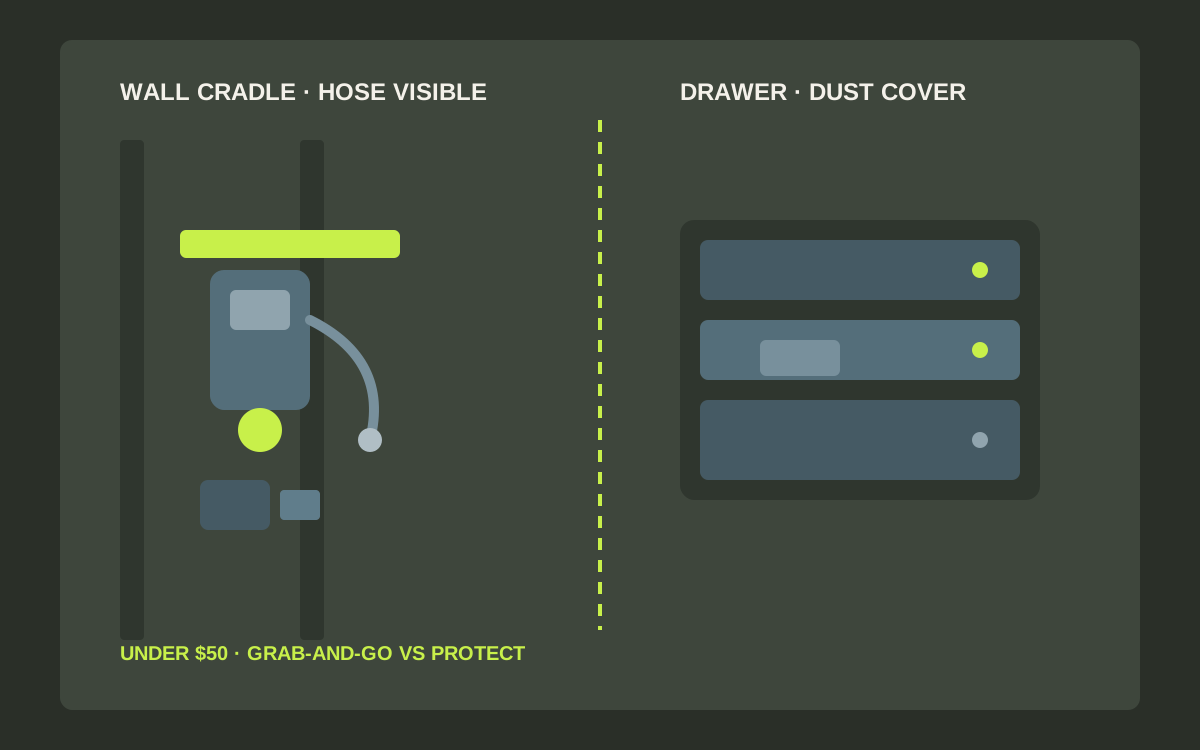
For most attached garages, a stud-mounted wall cradle or lipped shelf under $50 wins when you need grab-and-go visibility for the inflator, hose, and gauge. A drawer or lidded bin wins when dust, theft risk, or rental rules make open wall hang a poor fit. Many shops do both: wall for the daily unit, drawer for spares and adapters. Confirm the current ratings, dimensions, and price on the listing before you buy.
Shop portable tire inflator wall mounts on Amazon
Who this is for
- Garage owners who lose the portable tire inflator in a cluttered drawer when a tire is already soft
- Drivers who want hose, gauge, and chuck visible at eye level for a 60-second pressure check
- Renters and dust-heavy shops deciding whether wall hang or enclosed bin storage fits their space under $50
Quick answer
For most attached garages, a stud-mounted wall cradle or lipped shelf under $50 wins when you need grab-and-go visibility for the inflator, hose, and gauge. A drawer or lidded bin wins when dust, theft risk, or rental rules make open wall hang a poor fit. Many shops do both: wall for the daily unit, drawer for spares and adapters. Confirm the current ratings, dimensions, and price on the listing before you buy.
Quick comparison
| Format | Best for | Typical price band | Why it wins |
|---|---|---|---|
| Stud cradle / lipped wall shelf | Daily grab-and-go inflators | Usually $12–$35 | Best default for attached garages |
| Pegboard / track rated hook | Shops already on peg or rail | Usually $8–$25 | Confirm live rating + hose zone |
| Drawer / lidded bin | Dust, rentals, theft concerns | Usually $10–$40 | Wins for protection, slower grab |
| Hybrid: wall + shallow drawer tray | Daily unit + spare adapters | Usually $20–$50 band | Often the real winner |
| Décor adhesive hook alone | Never for denser cordless units | — | Wrong tool class |
What to look for
Grab speed vs protection
Wall mounts win when a soft tire means you want the compressor, hose, and chuck in one glance. Drawers win when grit, paint overspray, or curious hands make an open hang risky. Rank which problem you hit more often before you shop.
Hose, gauge, and chuck sibling zone
An inflator without its hose or chuck is dead weight. Wall setups need a cup, hook, or lipped shelf for the hose coil and gauge. Drawer setups need a shallow tray so adapters do not bury the unit under shop rags.
Weight, heat, and duty honesty
Portable 12V and cordless inflators vary widely in mass and heat after a fill. Match published hook or shelf ratings to the hang weight of your heaviest unit — never infer a rating from a product photo. Let hot units cool before parking them against plastic bins.
Structure, rentals, and décor sticky pads
Studs or a plywood backer beat hollow drywall for repeated grab cycles. Renters who cannot drill may prefer a sturdy drawer or tote. Décor adhesive hooks are the wrong tool class for denser cordless compressors.
When the wall mount wins
Grab-and-go before a commute or road trip
A soft tire at dawn is not the moment to dig through a drawer of chargers and zip ties. A wall cradle at eye level keeps the inflator, hose, and chuck in one motion so you are on the road instead of hunting.
Hose and gauge visibility
Coiled hoses and pencil gauges vanish in deep drawers. A lipped shelf or cup beside the cradle keeps the sibling gear visible and stops the hose from becoming a floor trip hazard.
Floor and bench space recovery
Parking the inflator on the wall frees a tote footprint and keeps the workbench clear for actual repairs. That matters in one-car garages where every square foot is contested.
When drawer or bin storage wins
Dust, grit, and paint overspray
Open wall hang near a grinder or paint booth coats vents and gauges. A lidded drawer or tote keeps the compressor cleaner between seasonal uses.
Rentals and no-drill walls
If you cannot screw into studs, a sturdy drawer organizer or labeled tote often beats a failing décor adhesive hook. Move the whole kit when you leave the lease.
Theft and shared-garage privacy
Open wall displays invite borrow-and-never-return. A closed drawer or lockable cabinet is the better under-$50 answer in shared or street-facing spaces.
Hybrid setups that beat either extreme
Wall for the daily inflator; drawer for adapters and spares
Hang the unit you grab weekly. Keep Presta/Schrader adapters, spare fuses, and the cigarette-lighter cord in a shallow labeled tray so the wall station stays lean.
Pair with tire-pressure and jumper stations
Build one roadside-ready wall zone: inflator, pressure gauge, jumper cables or jump starter. That cluster beats scattering emergency gear across three drawers.
Treat price bands as moving targets
Check the current ratings, dimensions, and price on the listing before you buy.
Installation honesty for wall mounts
Locate studs; use appropriate lag or structural screws
Follow the maker’s hardware guidance. For hollow sections between studs, add a painted plywood backer screwed into two studs, then mount the cradle to the backer.
Proof-load the empty holder, then hang the heaviest inflator for a day
Watch for tip-down, screw creep, or drywall dimpling. Fix before you trust the wall on a cold-morning tire day.
Leave hose swing and power-cord clearance
Orient the hose so it cannot snag a hip or car door. Keep charging cords off the walking aisle and away from hot muffler arcs when the car is parked.
Label chuck types if you keep bike and car adapters together
A paint-marker tag on the cup saves the wrong-valve grab when you are halfway through a fill.
Mistakes to avoid
- Hanging denser cordless inflators on décor adhesive hooks.
- Ignoring published weight limits and hose clearance.
- Leaving the hose coiled on the floor as a trip line.
- Storing a hot compressor against soft plastic drawer walls.
- Scattering the gauge, chuck, and power cord three bays away from the inflator.
- Choosing a deep junk drawer with no tray so adapters bury the unit.
Related guides
Browse the hub: Garage wall storage under $50 - all guides
- Best Portable Tire Inflator Wall Mounts Under $50 for Garage
- Best Tire Pressure Gauge Wall Mounts Under $50 for Garage
- Best Jumper Cable Wall Hooks Under $50 for Garage
- Best Trailer Hitch Ball Mount Wall Holders Under $50 for Garage
FAQ
Is a wall mount or a drawer better for a portable tire inflator under $50?
Wall mounts usually win for daily grab-and-go in an attached garage. Drawers win for dust, rentals, or theft concerns. A hybrid — wall for the daily unit, drawer for adapters — is often the best under-$50 answer.
Can adhesive hooks hold a portable tire inflator?
Light 12V bricks sometimes sit on a stout utility hook, but denser cordless compressors need screws into studs or a rated track/pegboard system. Don’t trust décor adhesive with a heavy load.
Should I store the hose and gauge with the inflator?
Yes. Keep hose, chuck, and gauge in the same zone — wall cup or shallow drawer tray — so a pressure check is one grab, not a scavenger hunt.
What if I rent and cannot drill into the garage wall?
Prefer a sturdy drawer, tote, or freestanding shelf organizer under $50. Skip décor sticky pads for heavier cordless units; move the whole kit when the lease ends.
Bottom line
Portable tire inflator wall mount vs drawer storage under $50 is not a single winner: wall cradles win for visibility and speed; drawers win for dust, rentals, and privacy. Build a grab-ready wall zone when you can screw into structure, keep hose and gauge beside the unit, and check the current ratings and price on the listing before you buy.