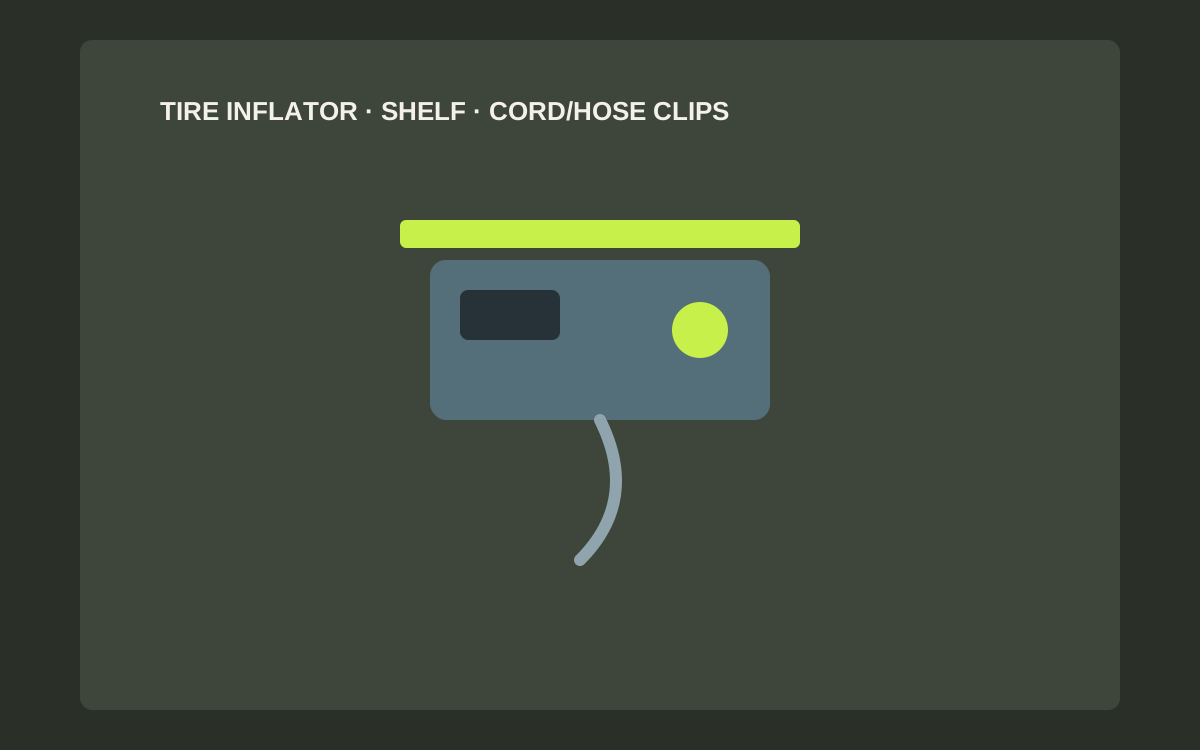
For most garages, the best under-$50 portable tire inflator wall mount is a shallow stud-mounted shelf, cradle, or bracket rated above the unit’s hang weight — with cord and hose clips so the power lead and air hose do not snag the aisle. Prefer a lip or strap so the brick cannot walk forward, and never trust décor adhesive alone with a steel compressor.
Shop portable tire inflator wall mounts on Amazon
Who this is for
- Garage owners clearing portable tire inflators off the floor under $50
- DIYers who want the compressor grab-ready beside jumper cables and ramps
- Anyone mounting a shelf or cradle without guessing at capacity for a dense brick
Quick answer
For most garages, the best under-$50 portable tire inflator wall mount is a shallow stud-mounted shelf, cradle, or bracket rated above the unit’s hang weight — with cord and hose clips so the power lead and air hose do not snag the aisle. Prefer a lip or strap so the brick cannot walk forward, and never trust décor adhesive alone with a steel compressor.
Quick comparison
| Format | Best for | Typical price band | Why it wins |
|---|---|---|---|
| Stud shelf / cradle bracket | Most portable 12V and cordless inflators | Usually $12–$35 | Best under-$50 default |
| Deep utility hook + strap | Units with a sturdy hang handle | Usually $8–$25 | When a shelf will not fit |
| Pegboard / track shelf (rated) | Shops already on track systems | Usually $10–$30 | Confirm live rating |
| Adhesive décor hook | Never for inflator bricks | — | Wrong tool class |
What to look for
Weight vs footprint
Portable inflators are dense. Match shelf depth and rating — never guess at them.
Cord and hose control
Clips keep 12V leads and chuck hoses out of walkways.
Grab height
Eye-to-chest height beats floor diving before a tire check.
Structure
Studs or a plywood backer beat hollow drywall for repeated grab cycles.
Where inflator mounts earn their place
On a stud wall beside jumper cables, ramps, and battery chargers
One roadside / tire-care station.
Near the bay door without trailing hose across the walk path
Trip-hazard awareness.
Not above open solvent or grinding splash without cover
Electronics dislike debris.
How to choose the right capacity
Weigh the inflator and measure its footprint
Shelf depth and rating must fit.
Prefer lips, cradles, or straps so bricks do not walk forward
Bump tests matter.
Plan clips for the power lead and chuck hose
Tidy leads prevent snags.
Treat price bands as moving targets
Check the current ratings, dimensions, and price on the listing before you buy.
Installation that survives tire-check mornings
Locate studs; use appropriate screws
Follow maker hardware guidance.
Proof-load the empty shelf, then the inflator for a day
Watch for tip-down.
Coil hose so the chuck faces the wall or a catch
Swing clearance.
Label the 12V/plug adapter if you share the outlet wall
Station thinking.
Mistakes to avoid
- Hanging dense inflator bricks on décor adhesive hooks.
- Ignoring published weight and shelf-depth limits.
- Trailing chuck hoses across walkways.
- Mounting only into thin hollow drywall.
- Storing the unit where grinding sparks can pit the housing.
Related guides
Browse the hub: garage wall storage under $50 - all guides
- Best Car Ramp Wall Storage Hooks Under $50 for Garage
- Best Oil Drain Pan Wall Holders Under $50 for Garage
- Best Battery Charger Wall Mounts under $50 (Charging Station Shelves)
FAQ
What is the best portable tire inflator wall mount under $50 for garage?
A stud-mounted shallow shelf or cradle with cord/hose clips is usually the best under-$50 pick.
Can adhesive hooks hold a tire inflator?
No. Dense compressors need screws into studs. Confirm the weight rating on the product page.
Same wall as jumper cables?
Yes — build one roadside-kit / tire-care station.
Leave the hose coiled on the mount?
Yes if clips keep the chuck from swinging into the aisle.
Bottom line
Portable tire inflator wall mounts under $50 earn their keep when a dense brick sits on a stud shelf with cord and hose clipped tidy — not when a compressor peels décor adhesive off drywall. Check the current details on the listing before you buy.