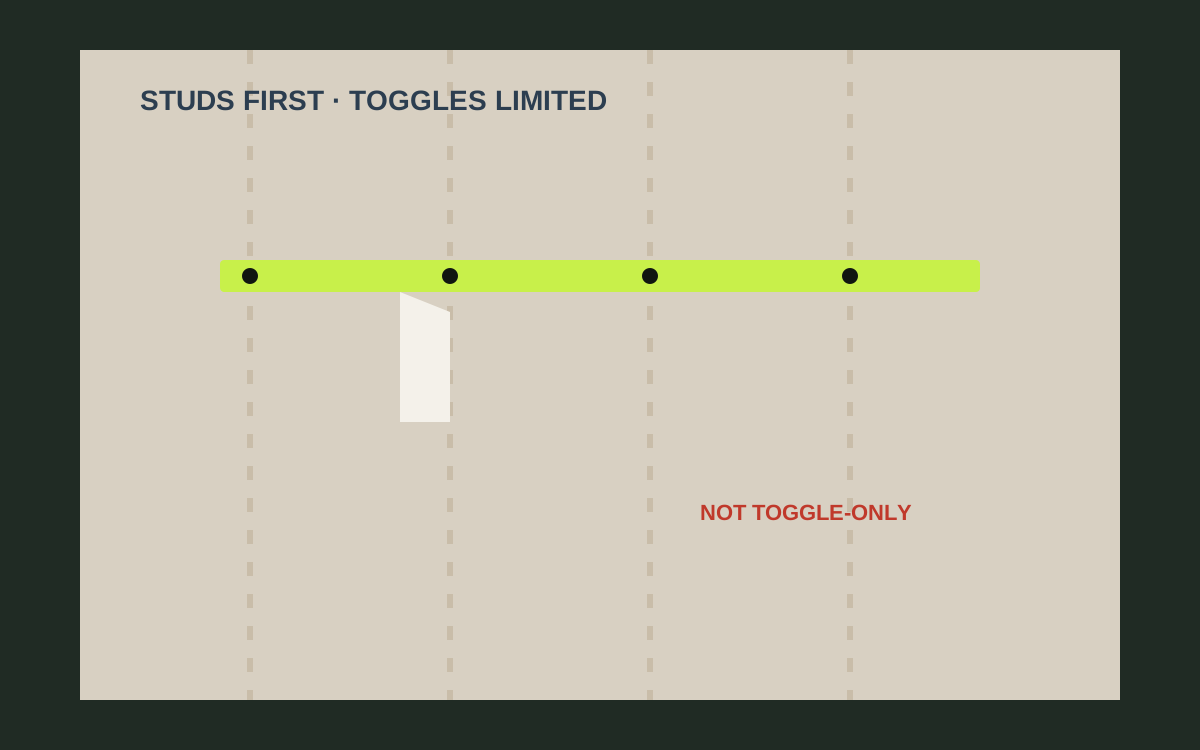
On drywall garage walls, mount a French cleat by finding studs first and fastening the wall cleat into as many studs as possible. Use rated toggle-style anchors only for light, non-critical holes — not as the main support for heavy hangers. Under $50, a short level cleat on real studs beats a long cleat hanging from drywall alone.
Shop French cleat kits and mounting hardware on Amazon
Who this is for
- DIYers whose garage walls are drywall over studs and need a cleat under $50
- Homeowners who cannot hit perfect studs on every hole and need honest toggle-anchor limits
- Anyone comparing a short drywall-aware cleat install with waiting for a full stud-bay redesign
What you need
- Short French cleat kit or cleat blanks under $50 plus at least one hanger
- Stud finder you trust, tape measure, pencil, and level
- Drill/driver, bits, and structural screws for stud hits
- Rated heavy-duty toggle or expanding drywall anchors only for light secondary holes — never as the sole plan for heavy shelves
- Painter’s tape for layout lines
Quick answer
On drywall garage walls, mount a French cleat by finding studs first and fastening the wall cleat into as many studs as possible. Use rated toggle-style anchors only for light, non-critical holes — not as the main support for heavy hangers. Under $50, a short level cleat on real studs beats a long cleat hanging from drywall alone.
Quick comparison
| Approach | Best for | Typical price band | Why it works |
|---|---|---|---|
| Cleat spanning 2+ studs | Best drywall-over-studs default | Usually $25-$50 kits | Strongest under-$50 path |
| Stud screws + light toggle at ends | When length slightly misses a third stud | Usually anchors add cost | Only for light end support |
| Toggle-only cleat | Not recommended for tool loads | Usually N/A | Avoid as the main plan |
| Wait / shorten the cleat to hit studs | When studs will not cooperate | Usually $0–kit price | Often the safest choice |
What to look for
Studs are the primary plan
French cleats transfer load into the wall line. Every major fastener should prefer a stud. Map studs before you fall in love with cleat length.
Toggle anchors have hard limits
Quality toggles can help a light secondary screw, but they are not a license to hang clamp racks full of steel on hollow drywall. Read ratings and derate for dynamic loads.
Level still decides success
An out-of-level cleat on drywall is just as annoying as on any other wall. Level first, fasten second.
Weight honesty
Under $50 starter cleats are for modest modular hangers. Loaded lumber shelves and heavy tool holders need stud density, not wishful anchors.
Before you trust drywall
Find and verify studs
Use a stud finder, then confirm with a thin pilot in a hidden spot if needed. Mark centers along the full cleat run.
Choose length that hits structure
A shorter cleat into two solid studs beats a longer cleat floating on drywall.
Inventory hanger loads
If your first hangers are heavy clamp racks or deep shelves, do not lean on toggles. Hit studs or redesign.
Mounting steps
- Clear the wall and map stud centers at the planned cleat height; note any odd spacing.
- Draw a level reference line and dry-fit the wall cleat with the bevel oriented correctly.
- Mark every hole that lands on a stud. Remodel the layout if most holes miss structure.
- Pre-drill and drive structural screws into studs so the cleat sits tight and level.
- Only if a non-critical end hole still misses a stud, install a rated heavy-duty toggle per its instructions — and keep that zone for light hangers only.
- Hang the lightest cleat hanger first, then a realistic load. Watch for drywall crush, screw spin, or cleat flex.
- Label mentally which section is stud-backed versus toggle-backed so you never park the heaviest hanger on the weak end.
- Leave empty cleat length over studs for future heavy hangers instead of filling the weak spots first.
Safety, studs, and toggle limits
Dynamic loads multiply risk
Lifting a loaded hanger off a cleat jerks the wall. Ratings that assume static décor loads are too optimistic for garage tools.
Hollow drywall is not a stud
No amount of brand-name cleat lumber changes that. If you cannot hit studs, shorten the project or build a ledger that does.
Compared with a full stud-bay install
Our standard French cleat kit how-to assumes solid stud fastening end to end. Use that approach whenever possible; this drywall article is the compromise playbook.
Inspect after the first weeks
Retighten if anything loosens. Soft drywall paper tear around a mismarked hole means remount into a stud.
Mistakes to avoid
- Mounting an entire cleat on drywall anchors alone for tool shelves.
- Assuming every hole can be a toggle if the cleat is “heavy duty.”
- Skipping stud finding because the drywall “feels solid.”
- Parking the heaviest hanger on the only toggle-supported end.
- Installing out of level and blaming the hangers afterward.
Related guides
Browse the hub: Garage wall storage under $50 - all guides
- How to Mount a French Cleat Kit on a Garage Wall Under $50
- Best French Cleat Kits Under $50 for Garage Walls
- Pegboard vs French Cleat for Garage Walls: Which Under-$50 System Wins?
FAQ
Can I mount a French cleat on drywall under $50?
Yes if you fasten into studs for the main load path. Toggles are only a limited backup for light secondary holes — not the whole system.
Are toggle anchors strong enough for French cleats?
Quality toggles can support modest static loads when installed correctly, but garage tool hangers create dynamic forces. Prefer studs; treat toggles as constrained helpers.
What if my cleat holes miss the studs?
Shorten or shift the cleat so structural screws hit studs. Do not “make up for it” with a row of drywall anchors under a heavy shelf.
How much weight can a drywall-mounted cleat hold?
Only what the stud connections (and any rated anchors) safely allow after derating for dynamic use. When unsure, keep hangers light or remount onto verified studs.
Bottom line
A French cleat on drywall only works when studs carry the real load. Find them, fasten into them, keep toggles for light secondary roles, and refuse to hang heavy shelves on hollow wall alone. Under $50, a short honest cleat on structure beats a long decorative failure.