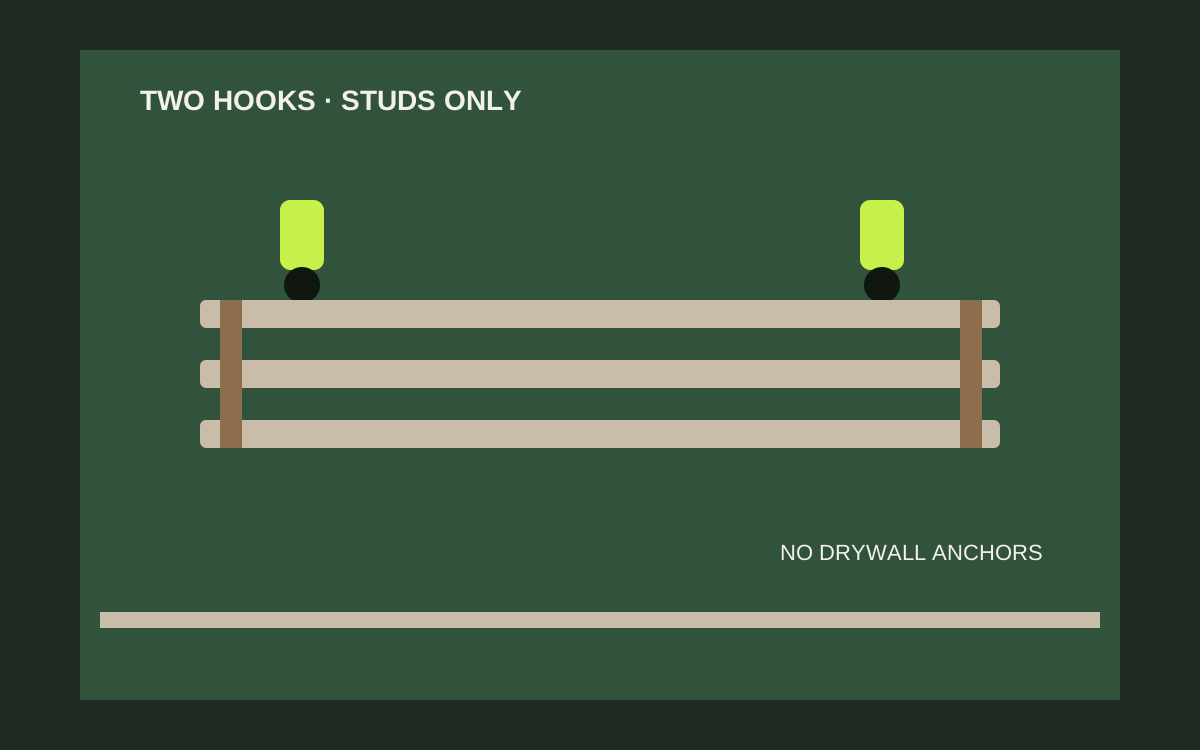
Hang a ladder only on two stout hooks (or a rated hanger) screwed into studs or solid masonry, spaced to support the rails without bowing, and clear of doors and walkways. Under $50, safety comes from structure and ratings — never from a single decorative hook or drywall anchors.
Shop heavy-duty ladder wall hooks on Amazon
Who this is for
- Homeowners getting extension or step ladders off the garage floor
- DIYers who need a stud-safe under-$50 hang without overbuilding
- Anyone who has seen a single undersized hook bend under ladder weight
What you need
- Two heavy-duty ladder hooks or a rated ladder hanger set under $50, each rated above the ladder weight with margin
- Stud finder, tape measure, pencil, and level
- Drill/driver and bits for lag screws or structural screws sized to the hardware
- A helper for the first lift of long extension ladders
- Painter’s tape to mark ladder length and door/car clearance before drilling
Quick answer
Hang a ladder only on two stout hooks (or a rated hanger) screwed into studs or solid masonry, spaced to support the rails without bowing, and clear of doors and walkways. Under $50, safety comes from structure and ratings — never from a single decorative hook or drywall anchors.
Quick comparison
| Mount approach | Best for | Typical price band | Why it works |
|---|---|---|---|
| Dual stud-mounted heavy hooks | Most extension and step ladders | Usually $15-$40 | Best under-$50 safety default |
| Dedicated ladder hanger brackets | When kit geometry matches your rails | Usually $25-$50 | Spreads load if rated |
| Single light utility hook | Never for full ladders | Usually N/A | Unsafe pivot risk |
| Drywall anchors / adhesive | Never for ladders | Usually N/A | Wrong tools entirely |
What to look for
Weight rating with real margin
Use the ladder’s stated weight and add margin for dynamic lifting. One hook rated “about right” is not enough; plan two structural supports.
Two points of contact
Support the ladder at two solid locations along its length so it cannot pivot off a single peg.
Studs or masonry only
Adult ladders are not drywall projects. If you cannot hit structure, store the ladder differently — do not improvise.
Clearance and orientation
Horizontal wall hangs are common; keep rungs and feet from blocking doors, bumpers, or head-strike zones. Secure so vibration cannot walk the ladder off the hooks.
Before you lift anything
Weigh and measure
Note ladder type, approximate weight, and length. Confirm the hooks’ combined rating exceeds that load with margin.
Choose orientation
Horizontal along a clear wall is typical. Vertical hangs need even more careful headroom and tip-risk planning.
Map studs and hazards
Find two studs that align with good support points on the ladder rails. Check car doors, entry doors, and walk paths.
Hanging steps
- Clear the wall and floor so you can mark, drill, and test-lift without climbing over clutter.
- Locate and mark two stud centers spaced to support the ladder without letting the middle sag or the ends teeter.
- Tape the ladder’s outline at the planned hang height; open nearby doors and confirm bumper clearance.
- Position the first hook on a stud, level its mate on the second stud, and mark structural screw holes.
- Pre-drill pilots sized for the lags or structural screws. Drive fasteners fully so backplates sit tight — no spinning in drywall alone.
- With a helper for long ladders, set the ladder onto both hooks. Listen and watch for flex, roll, or stud crunch.
- Lift the ladder on and off once the way you will in real use. If either hook twists or the wall complains, remount before trusting it.
- Add a secondary retention strap only if the hardware is designed for it — do not use a weak cord as a substitute for proper hooks.
Safety and stud notes
No drywall-anchor exceptions
Ladders concentrate force and create leverage. Drywall anchors and adhesive hooks are unsafe for this job.
Dynamic loads
Taking a ladder down applies more than parked weight. Ratings need margin; tired one-person lifts need a helper.
Keep aisles safe
A wall-hung ladder that occupies a doorway or sits at head height over a walkway is a new hazard. Storage must not create strikes.
Inspect hardware seasonally
Recheck lags after the first weeks and after any wall impact. Soft wood crush and missed studs show up as movement.
Mistakes to avoid
- Hanging a full ladder from a single undersized hook.
- Using drywall anchors, plastic expansion plugs alone, or adhesive hooks.
- Mounting inside a door swing or over a primary walkway at skull height.
- Ignoring the ladder weight rating on the hardware packaging.
- Skipping a two-person test lift on long extension ladders.
Related guides
Browse the hub: Garage wall storage under $50 - all guides
- Best Garage Track Rail Hooks Under $50
- Hook Rail vs Individual Hooks for Garage Walls Under $50
- Best Step Stool Wall Mounts Under $50 for Garage
FAQ
How do I hang a ladder on a garage wall safely under $50?
Use two heavy-duty hooks or a rated hanger screwed into studs, spaced to support the ladder, clear of doors, and load-tested with a controlled lift before daily use.
Can one hook hold a ladder?
Do not plan on it. Two structural supports reduce pivot and bend risk. A single hook is an invitation for the ladder to roll off or bend the hardware.
Can I hang a ladder with drywall anchors?
No. Use studs or solid masonry with structural screws or lags sized to the hardware and load.
Horizontal or vertical hang?
Horizontal on two stud-mounted hooks is the common under-$50 approach for extension ladders. Vertical hangs need careful tip control and headroom and are easier to get wrong.
Bottom line
A ladder on the wall is only safer than a ladder on the floor when the hang is honest. Two stout hooks, real studs, rated hardware, clear swing paths, and a test lift beat any clever single-hook shortcut. Under $50, spend on structure-capable hooks — not décor hardware asked to do a structural job.