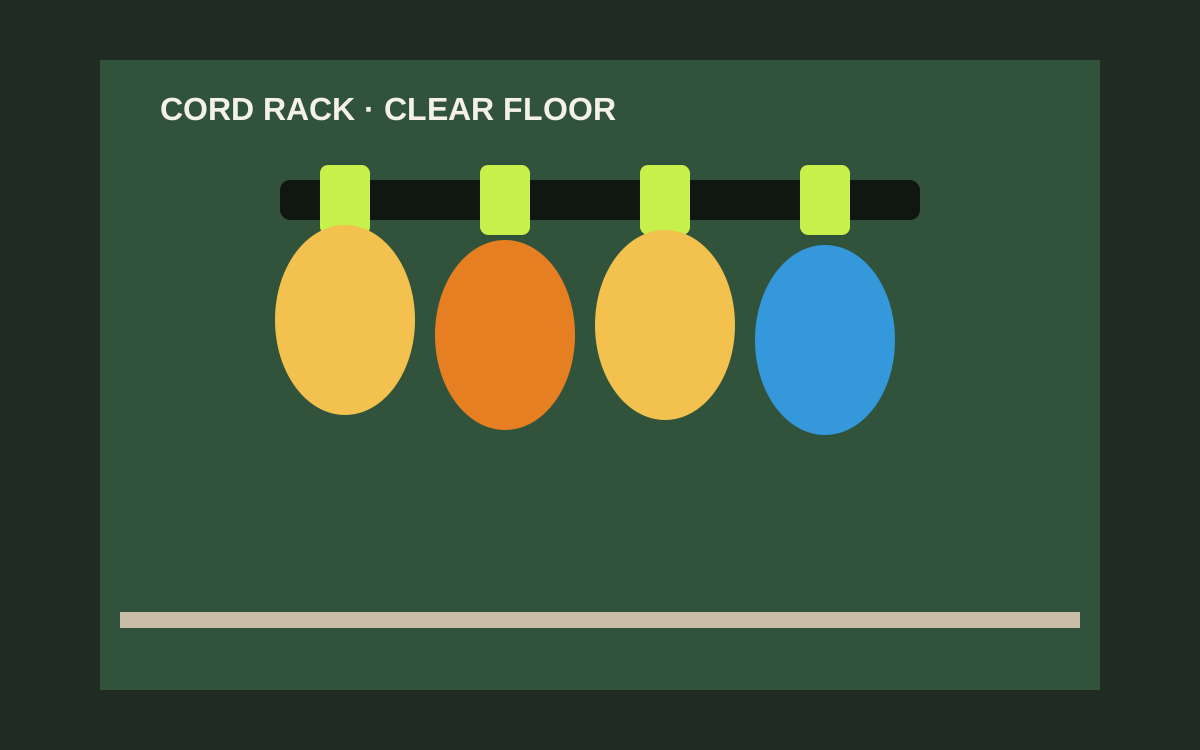
Hang extension cords on a screw-mounted rack or wide hooks landed on studs, with coils that keep plugs accessible and weight distributed. Under $50, a multi-arm cord rack or stout hook rail clears the floor faster than a bin and avoids the trip hazard of loose loops.
Shop extension cord wall racks on Amazon
Who this is for
- Homeowners tired of tangled cords on the garage floor
- DIYers installing a first under-$50 cord rack on studs
- Anyone managing several outdoor and shop extension cords
What you need
- Extension cord wall rack, wide hooks, or hose-style hanger under $50
- Stud finder, tape measure, pencil, and level
- Drill/driver and bits matched to the supplied screws
- Velcro straps or cord ties for tidy coils (optional)
- Your longest cord, coiled the way you actually store it, for a fit check
Quick answer
Hang extension cords on a screw-mounted rack or wide hooks landed on studs, with coils that keep plugs accessible and weight distributed. Under $50, a multi-arm cord rack or stout hook rail clears the floor faster than a bin and avoids the trip hazard of loose loops.
Quick comparison
| Rack style | Best for | Typical price band | Why it works |
|---|---|---|---|
| Multi-arm cord rack | Several cords of mixed lengths | Usually $15-$35 | Best under-$50 floor-clearing win |
| Wide coated hooks / rail | One or two heavy cords | Usually $10-$25 | Simple stud-mounted option |
| Hose reel–style hanger | Long outdoor cords | Usually $20-$40 | Smooth saddle reduces jacket pinch |
| Open floor bin | Temporary only | Usually varies | Loses to wall racks for trip safety |
What to look for
Support the coil, not just a loop
Heavy cords need a wide arm, saddle, or multi-hook rack so the jacket does not crease over a skinny nail.
Studs for real weight
A 100-foot cord is surprisingly heavy when wet or coiled dense. Prefer studs; adhesive hooks fail under that load.
Plug access and labeling
Park cords so ends are visible. Label length on the plug or hanger so you grab the right cord the first time.
Keep aisles clear
Mount high enough for coils to clear bumpers and mower handles, yet low enough to lift without a ladder.
Before you mount
Coil for storage, not speed stuffing
Use over-under or large loose loops so the cord pays out without knots. Over-tight windlass coils fight you later.
Count cords and lengths
A two-arm rack fills fast. Leave an empty arm for the next cord you buy.
Choose the wall near the work
Place the rack by the overhead door, bench, or yard exit you actually use, not in a forgotten corner.
Hanging steps
- Gather cords, shake out knots, and coil each one to the diameter your rack arms will hold.
- Locate studs where the rack backplate or hook plate will land; mark centers.
- Hold the empty rack at the planned height with your largest coil mocked in place; confirm bumper and walkway clearance.
- Level the rack, mark screw holes, and pre-drill into studs (or use correct masonry hardware).
- Fasten the rack fully. Skinny screws half-driven into drywall alone are not enough for heavy cords.
- Hang the heaviest cord first and tug gently. Watch for flex, tip, or jacket scrape on sharp edges.
- Add remaining cords with plugs facing out. Optional: add a length label on each plug boot.
- Keep the floor under the rack clear so a dropped coil does not become a new trip hazard.
Safety and stud notes
Electrical common sense
Unplug cords before coiling for storage when practical. Inspect for cracked jackets, heat damage, and crushed plugs before the next use.
Moisture and grit
Do not hang soaking cords against finished walls. Wipe outdoor cords before storage so grit does not grind into the jacket on the rack.
Weight margin
If a single cord already flexes the mount, add a second stud fastener or upgrade the rack — do not keep loading arms.
Mistakes to avoid
- Tossing cords into a floor bin where loops knit into knots and trip hazards.
- Using adhesive hooks for long, heavy extension cords.
- Creasing cords over a sharp nail or undersized hook.
- Mounting so low that coils collect water, salt, or tire splash.
- Hiding every plug inside the coil so you guess lengths every time.
Related guides
Browse the hub: Garage wall storage under $50 - all guides
- Extension Cord Storage Ideas That Keep Floors Clear
- Best Air Compressor Hose Reels Under $50 (Wall Mount)
- Best Ratchet Strap Hangers Under $50 for Garage Walls
FAQ
How do I hang extension cords on a garage wall under $50?
Install a multi-arm cord rack or wide coated hooks on studs, coil cords loosely with plugs accessible, load-test the heaviest cord, then fill the remaining arms.
Is a hose hanger OK for extension cords?
Yes if the saddle is smooth and wide enough for your coil and the mount is screwed into structure. Avoid sharp edges that pinch the jacket.
Can I use Command hooks for extension cords?
Not for typical long shop or outdoor cords. Adhesive hooks lack reliable capacity for that weight and daily yanking in a dusty garage.
How should I coil cords for wall storage?
Use large loose loops or an over-under coil so the cord pays out cleanly. Do not wrench the jacket into tight, hot windlass coils on a skinny peg.
Bottom line
Extension cords belong on the wall, not in a trip-hazard pile. Screw a wide rack into studs, coil for clean payout, keep plugs visible, and load-test before filling every arm. Under $50, that simple install clears more floor than another plastic bin ever will.