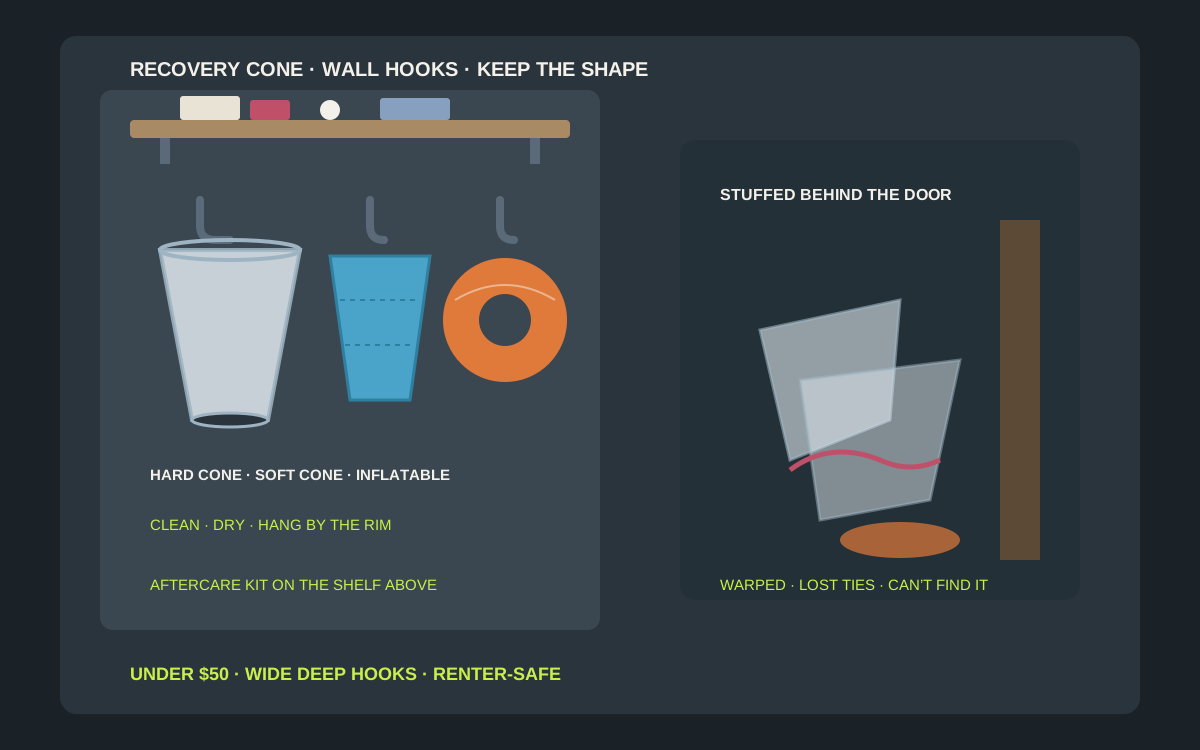
For most homes, the best under-$50 way to store a dog cone is one wide, deep utility hook per collar, screwed into a stud or a proper anchor in the laundry room or mudroom: a hard plastic cone hangs by its rim so it keeps its shape, a soft fabric cone hangs by its strap loop, and an inflatable donut collar hangs half-deflated so the seams are not stressed. Add a small wall shelf or bin above for the aftercare kit — spare ties, a gauze roll, the vet’s instructions — so everything is in one place the next time your dog needs it. Over-door racks suit renters with soft cones; pegboard suits multi-dog homes. Check current hook depth, wall-type guidance and price on the listing before you buy.
Shop wide wall hooks for dog cones on Amazon
Who this is for
- Dog owners who kept the recovery cone after a spay, neuter, hot spot or stitches and now have nowhere to put it
- Households with a soft cone, a hard plastic cone and an inflatable donut collar all fighting for closet space
- Renters and homeowners comparing wide utility hooks, pegboard, over-door racks and small wall shelves under $50
Quick answer
For most homes, the best under-$50 way to store a dog cone is one wide, deep utility hook per collar, screwed into a stud or a proper anchor in the laundry room or mudroom: a hard plastic cone hangs by its rim so it keeps its shape, a soft fabric cone hangs by its strap loop, and an inflatable donut collar hangs half-deflated so the seams are not stressed. Add a small wall shelf or bin above for the aftercare kit — spare ties, a gauze roll, the vet’s instructions — so everything is in one place the next time your dog needs it. Over-door racks suit renters with soft cones; pegboard suits multi-dog homes. Check current hook depth, wall-type guidance and price on the listing before you buy.
Quick comparison
| Format | Best for | Typical price band | Why it wins |
|---|---|---|---|
| Wide utility or J-hook | One or two hard plastic cones | Usually $8–$25 | Cradles the rim; keeps the shape; seconds to grab |
| Pegboard + long hooks | Multi-dog homes, several cone sizes | Usually $15–$40 | Sizes side by side; add a bin for the aftercare kit |
| Over-door hook rack | Renters, soft fabric cones, no drilling | Usually $10–$30 | Zero holes; check door clearance |
| Small wall shelf + hooks underneath | Cone plus spare ties, gauze and vet notes | Usually $15–$40 | Collar and aftercare kit in one place |
| Wall bin or wire basket | Inflatable donuts and folded soft cones | Usually $12–$35 | Holds shapes that will not hang neatly |
What to look for
Hook width and depth: cones are wide, not heavy
A recovery cone weighs little, but it is wide and awkward. A narrow décor hook pinches a plastic rim and lets it slip off sideways; a wide, deep utility hook — or a bike-style J-hook with a rubber coating — cradles the rim without creasing it. Measure the cone’s rim thickness and the collar opening, and pick a hook deep enough to take the cone plus a soft cone hung in front of it if you store two.
Keep the shape: never crush a plastic cone
Hard cones that spend months squashed behind a door or under a box warp, crack at the snaps or lose the overlap that keeps them closed. Hanging by the rim lets gravity hold the shape. Do not nest a large cone inside a small one, and keep cones away from heaters and hot garage walls where thin plastic softens.
Clean, dry, then hang
A cone that comes off after recovery is dirty — food, water, drool and sometimes wound residue. Wash it with mild soap and warm water following the maker’s care notes, dry it completely and only then hang it. Fabric and inflatable collars need full air-drying with the cover open; never hang a damp soft cone inside a closed cabinet.
Renter-safe mounting and the right spot
Cones are light, so adhesive utility hooks rated for your wall can work on smooth paint after the full cure time. Pegboard, shelves and anything also holding leashes or crates belong on screws into studs or proper anchors; garage block or concrete needs masonry anchors. Pick a dry room you pass often — laundry room, mudroom, utility closet — so you actually remember where it is.
Hooks vs pegboard vs over-door vs shelf
When a wide utility hook wins
If you have one dog and one cone, a single wide utility hook is the best under-$50 answer. The cone hangs by its rim at eye level, nothing sits on top of it, and when the vet says “cone on” it is off the wall in seconds. Choose a hook with a rounded or rubber-coated arm so it does not scratch or dent thin plastic.
When pegboard earns its space
Two dogs of different sizes, or a dog that has needed a small, medium and large cone over the years, quickly outgrow one hook. A small pegboard panel lets you hang each size side by side on long hooks, add a basket for the inflatable collar and keep the aftercare kit in a clip-on bin underneath.
When an over-door rack makes sense
For renters, an over-door hook rack on the laundry or utility closet door holds soft fabric cones and folded inflatables with no holes at all. Confirm the door still closes over the bracket, and pick a deep-hook model so a swinging door does not knock a hard plastic cone loose.
When a shelf plus hooks is the smarter setup
A small wall shelf with hooks underneath turns cone storage into a recovery station: the cone hangs below, while spare ties or a soft collar, a gauze roll, the vet’s discharge sheet and the medication schedule live on the shelf above. Keep medications themselves in a closed cabinet out of reach of pets and kids.
Build a recovery station you can find in a hurry
Store the cone where recovery actually happens
Most recoveries play out in the laundry room, a mudroom or wherever the dog crate lives. Mount the hook there rather than in the attic or a garage loft, so the cone is in reach the moment your dog starts licking stitches.
Label the size
A small piece of tape on the rim with the dog’s name and neck size saves guessing later, especially in multi-dog homes or when a puppy has outgrown last year’s cone.
Keep the fastening parts with the cone
Many cones rely on ties, loops or snaps that disappear the moment they leave the cone. Thread spare ties through the collar loops before hanging, or keep them in a small bag clipped to the same hook.
Rotate in the soft cone
If your dog sleeps badly in a hard cone, a soft fabric or inflatable alternative is often worth keeping — ask your vet whether it suits the wound. Give it its own hook so it dries properly and does not crease against the plastic one.
Treat under-$50 bands as moving targets
Check the current hook depth, wall-type guidance and price on the listing before you buy.
Installation that holds up
Find studs or use the right anchor
Use a stud finder for shelves and pegboard; where there is no stud, use anchors rated by the maker for the load and wall type. On garage block or concrete, use masonry anchors. Adhesive hooks belong on smooth, cured paint and light cones only.
Mount high enough, but not on a ladder shelf
Hang cones above the reach of a curious dog that likes to chew plastic, but low enough that you can grab one one-handed while holding a wriggling patient with the other.
Dry-fit before drilling
Hold your largest cone against the wall at the planned height. Check that the rim clears door swing, light switches and the dryer vent, and that a second cone will fit beside it without overlap.
Move-out or rehang without scars
Remove the cones first. Release adhesive hooks with the maker’s slow-pull method, or fill screw holes if you used hardware. Never pry a loaded hook off painted drywall.
Mistakes to avoid
- Squashing a hard plastic cone behind a door or under boxes until it warps and will not close.
- Hanging a cone that still has food, saliva or wound residue on it.
- Storing a damp fabric or inflatable collar in a closed cabinet where it mildews.
- Using a narrow décor hook that pinches the rim and lets the cone slide off.
- Losing the ties or snaps because they were not stored with the cone.
- Keeping the cone in a hard-to-reach loft so nobody can find it when the dog starts licking stitches.
Related guides
Browse the hub: pet gear wall mounts under $50 - all guides
- Best Pet First Aid Kit Wall Mounts Under $50
- Best Pet Medication Wall Cabinets Under $50
- Best Dog Coat & Towel Wall Hooks Under $50
- Best Dog Bandana & Accessory Wall Organizers Under $50
FAQ
What is the best way to store a dog cone on the wall?
Hang a hard plastic cone by its rim on one wide, deep utility hook screwed into a stud or proper anchor in a dry room you pass often. Give soft cones and inflatable collars their own hooks or a basket, and keep the aftercare kit on a shelf nearby.
Can adhesive hooks hold a dog cone?
Usually yes, because cones are light — choose a wide adhesive utility hook rated for your wall, mount it on smooth cured paint and wait the full cure time. Shelves, pegboard and anything also carrying leashes should be screwed into studs or anchors.
How do I keep a plastic dog cone from warping in storage?
Hang it by the rim instead of stacking or squashing it, do not nest it inside a smaller cone, and keep it away from heaters, sunny windows and hot garage walls.
Should I clean a dog cone before storing it?
Yes. Wash it with mild soap and warm water following the maker’s care notes, rinse, and let it dry completely before hanging. Fabric and inflatable collars need full air-drying with any cover open.
Is it worth keeping a dog cone after recovery?
Often, yes — many dogs need one again for hot spots, minor wounds or later procedures, and having one on hand saves a late-night pet-store run. Check that it still fits and is undamaged, and follow your vet’s advice on which type suits the wound.
Where should I hang a dog cone — garage, laundry room or closet?
A laundry room, mudroom or utility closet is best: dry, temperature-stable and close to where most recoveries happen. A garage works if it does not get hot, but use masonry anchors on block or concrete.
Bottom line
Dog cone and e-collar wall hooks under $50 work when the cone keeps its shape and stays easy to find: one wide, deep hook per hard cone, separate hooks or a basket for soft and inflatable collars, and a small shelf for the aftercare kit. Clean and dry before hanging, mount in a dry room you pass every day, use the right anchor for your wall, and check current ratings and price on the listing before you buy.