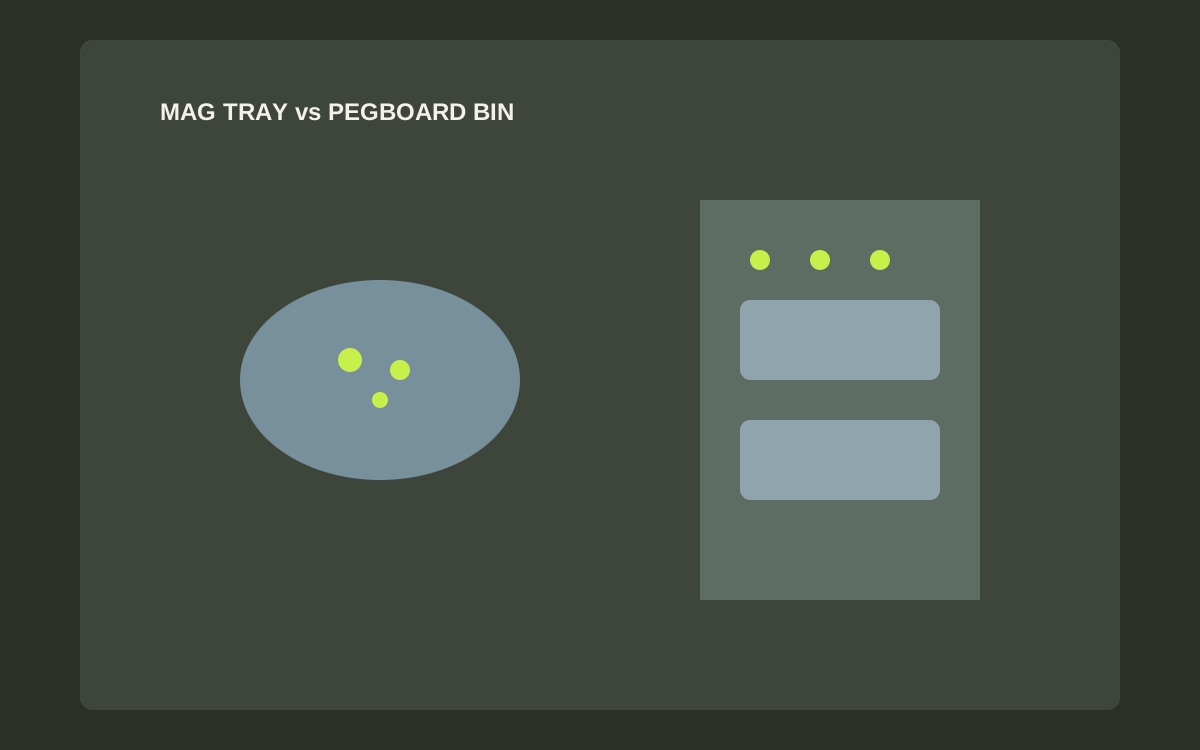
Under $50, a magnetic parts tray usually wins for mobile job-side staging of steel fasteners during a wrench session; a pegboard bin wins for semi-permanent sorted storage of mixed small parts on the wall. Many shops use both — tray for the active job, bins for inventory. Neither replaces a rated wall hook if you hang trays — confirm the weight rating first.
Shop magnetic parts trays and pegboard bins on Amazon
Who this is for
- Garage techs choosing how to stage bolts and clips under $50
- DIYers comparing mobile magnetic trays with wall pegboard bins
- Anyone organizing fasteners beside a bay or bench
Quick answer
Under $50, a magnetic parts tray usually wins for mobile job-side staging of steel fasteners during a wrench session; a pegboard bin wins for semi-permanent sorted storage of mixed small parts on the wall. Many shops use both — tray for the active job, bins for inventory. Neither replaces a rated wall hook if you hang trays — confirm the weight rating first.
Quick comparison
| Format | Best for | Typical price band | Why it wins |
|---|---|---|---|
| Magnetic parts tray | Active job staging for steel fasteners | Usually $8–$25 | Wins mid-repair |
| Pegboard bin / cup | Sorted inventory on the wall | Usually $10–$35 | Wins for storage |
| Mix of both | Tray on the job + bins for stock | Usually $20–$45 | Best under-$50 system |
| Open floor pile | Never | — | Lost bolts forever |
What to look for
Job-side vs inventory
Trays move with the work; bins stay put and labeled.
Material honesty
Magnets love steel; plastic clips and brass may need bins.
Spill risk
Trays tip if overloaded; bins need lips and secure pegs.
Wall plan
Pegboard needs solid mounting; hanging trays need stud hooks.
Clear winner criteria
Choose a magnetic parts tray when…
You are mid-job with steel bolts and need a dish that moves with you.
Choose pegboard bins when…
You are sorting mixed inventory by size or type on a wall.
Choose both when…
You wrench often — tray for the active pile, bins for restock.
Where each option earns its place
Tray on the fender or bench during a repair
Parts stay visible and magnetic.
Labeled pegboard cups for spare clips and screws
Inventory by eye.
Wall hooks for parking empty trays between jobs
See the tray-hook guide.
How to choose the right capacity
List your parts: steel vs plastic vs mixed
Magnet only helps ferrous bits.
Count how often you move vs sort
Mobility favors trays; sorting favors bins.
If hanging trays, budget stud hooks separately
Magnets do not mount trays to drywall.
Treat price bands as moving targets
Check the current ratings, dimensions, and price on the listing before you buy.
Mistakes to avoid
- Expecting magnets to hold brass or plastic clips.
- Overloading a tray until it spills into the engine bay.
- Mounting pegboard only into thin hollow drywall.
- Using the tray magnet as a wall hanger.
- Leaving unlabeled bins that become junk cups.
Related guides
Browse the hub: garage wall storage under $50 - all guides
- Best Magnetic Parts Tray Wall Hooks Under $50 for Garage
- Magnetic Tool Bar vs Pegboard for Small Garage Walls Under $50
- Best Magnetic Socket Rail Organizers Under $50 for Garage Walls
FAQ
Is a magnetic parts tray better than a pegboard bin under $50?
For mobile steel-fastener staging during a job, the tray usually wins. For labeled long-term sorting on the wall, pegboard bins win.
Can I hang a magnetic tray on pegboard?
Only with a rated hang method into solid structure — the tray magnet is not a wall mount. Confirm the weight rating on the product page.
What about non-magnetic parts?
Use bins or dishes; magnets will not help.
Can I use both?
Yes — that is the usual winning setup under $50.
Bottom line
Magnetic parts tray vs pegboard bin under $50: trays win for mobile steel-fastener staging; bins win for labeled wall inventory — and most garages should budget for both. Check the current ratings on the listing before you buy.