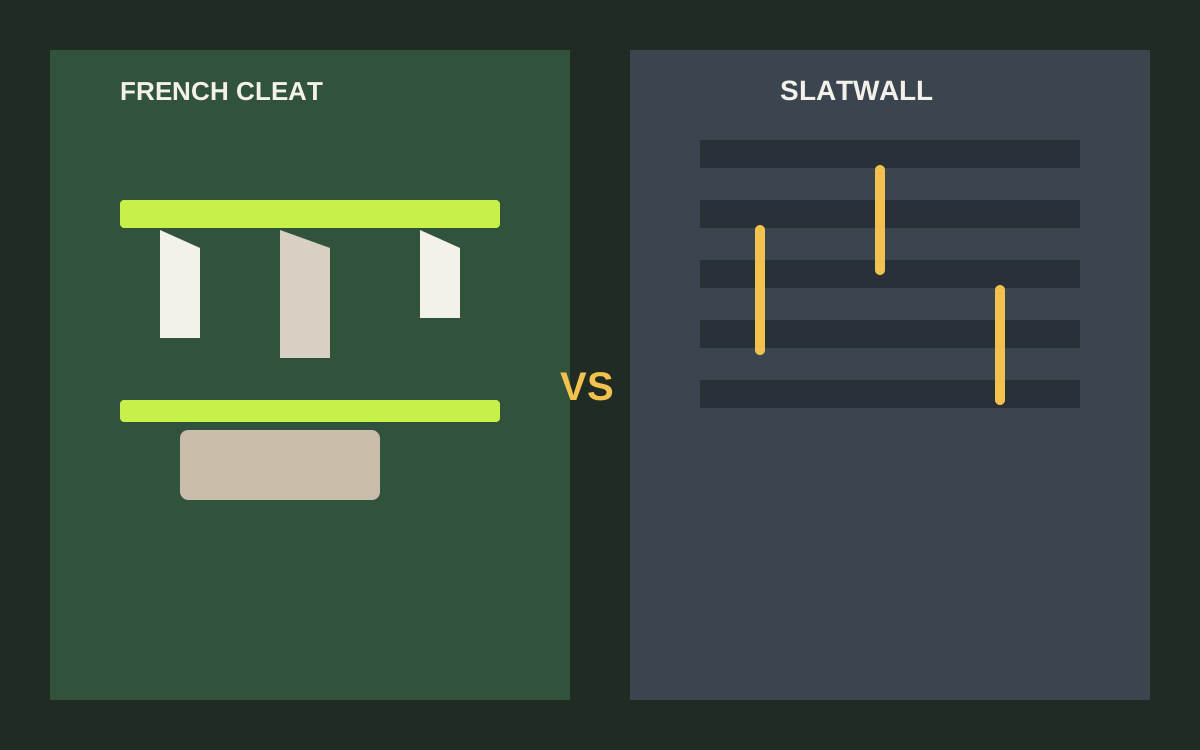
Under $50, a short French cleat starter usually wins when you want strong modular hangers you can build or buy for odd shapes; a small slatwall or track-panel starter wins when you want ready-made sliding hooks without woodworking. Neither finishes a whole wall for $50 — both are zone starters.
Compare French cleat and slatwall starters on Amazon
Who this is for
- DIYers choosing a first modular garage wall system under $50
- Woodworkers who like custom hangers versus ready-made slat accessories
- Anyone comparing cleats with plastic or PVC slatwall and metal track panels
Quick answer
Under $50, a short French cleat starter usually wins when you want strong modular hangers you can build or buy for odd shapes; a small slatwall or track-panel starter wins when you want ready-made sliding hooks without woodworking. Neither finishes a whole wall for $50 — both are zone starters.
Quick comparison
| Factor | French cleat | Slatwall / track panel | Edge |
|---|---|---|---|
| Custom odd-shaped holders | Excellent with DIY hangers | Usually $25-$50 kits | French cleat wins |
| Ready-made sliding hooks | Build or buy hangers | Usually $20-$50 panels | Slatwall/track wins |
| Heavy modular shelves | Strong on studs | Usually rating varies | Slight edge to well-mounted cleats |
| Fast rearrange, no saw | Needs hanger inventory | Usually hooks slide easily | Slatwall/track wins |
What to look for
Starter kit versus finished wall
Under $50 buys a short cleat run with a few hangers or a small slat/track section with hooks — not a fully loaded two-car wall. Plan the first zone honestly.
Load path and mounting
French cleats want a level wall cleat screwed into studs. Slatwall and metal track systems also need solid fastening; hollow drywall alone is not a heavy-tool plan for either.
Accessory ecosystem
Slatwall and track rails shine with off-the-shelf hooks and bins. French cleats shine when you need custom shelves, clamp racks, or odd cradles.
Look and growth path
Cleats look clean as you add matching hangers. Slat/track walls look commercial and rearrange quickly, but cheap panels can flex if under-fastened.
Clear winner criteria
Choose French cleat when…
You want modular strength for shelves and odd tool shapes, you are willing to add hangers over time, and you can mount a level cleat into studs. A short under-$50 kit is a legitimate first bay.
Choose slatwall or track panel when…
You want store-bought hooks and bins that slide without building hangers, you like a commercial look, and you can fasten the panel or track into structure across enough points.
Choose a hybrid when…
Run a short cleat for bulky custom holders and a track/slat section for quick hook changes on cords, helmets, and hand tools.
Side-by-side realities
Budget honesty
Slatwall brand panels and dense accessory packs climb past $50 quickly. Cleat lumber can be cheap if you build hangers, but time is a cost. Track-rail kits often sit between the two for under-$50 starts.
Strength myths
Neither system is magic on hollow drywall. Studs, correct screws, and respecting accessory ratings matter more than the brand silhouette.
Rearranging
Slat and track hooks move in seconds. Cleat hangers move just as fast once you own them — the delay is building or buying that first set.
Treat price bands as moving targets
Panel sizes, hook counts, and kit contents change with sales. Verify live dimensions, ratings, and price on the retailer page before ordering.
How to start under $50 without regret
Pick one zone, not the whole garage
A four-foot cleat run or a small track/slat section beats a half-finished dream wall.
Inventory accessories on day one
A bare cleat or empty slat panel is not storage. Budget hooks or hangers inside the $50 cap.
Hit structure on every major fastener
Level the cleat or panel, use all required screws, and load-test before filling the bay.
Leave growth room
Empty cleat length or open slats are cheaper than ripping out a cramped install next month.
Mistakes to avoid
- Expecting a $40 kit to finish an entire two-car wall.
- Mounting either system only to drywall for heavy swinging tools.
- Buying a cleat with no hangers, or slatwall with no hooks.
- Ignoring vertical clearance for shelves and long-handled tools.
- Mixing incompatible track brands and forcing accessories that do not lock.
Related pick: Slatwall vs Track Rail (Trackwall) for Garage Storage Under $50
Related guides
Browse the hub: Garage wall storage under $50 - all guides
Related hub: Apartment no-drill storage under $50 — only relevant if you cannot drill; neither French cleat nor real slatwall is a no-drill heavy-tool system.
- Best French Cleat Kits Under $50 for Garage Walls
- Best Garage Track Rail Hooks Under $50
- Pegboard vs French Cleat for Garage Walls: Which Under-$50 System Wins?
FAQ
Is French cleat or slatwall better under $50?
French cleat usually wins for custom modular strength on a short starter run. Slatwall or track panels usually win when you want ready-made sliding hooks without building hangers. Both are zone starters at this budget.
Can I install slatwall for under $50?
A small panel or track-rail starter with a few hooks is often possible. Full-wall branded slat systems and dense accessory packs typically exceed a strict $50 budget.
Is a French cleat strong enough for garage tools?
Yes when the wall cleat is level, screwed into studs or masonry, and hangers are built or rated for the load. The cleat is only as strong as that fastening.
What is the closest budget alternative to full slatwall?
Garage track-rail systems with sliding hooks often deliver similar rearrangeability at a friendlier under-$50 starter price than large PVC slat panels.
Bottom line
Under $50, treat both French cleat and slatwall as starter zones, not finished shops. Choose cleats when custom modular strength matters; choose slatwall or track panels when ready-made sliding hooks matter more. Mount into structure, budget accessories on day one, and grow the system that stays full.