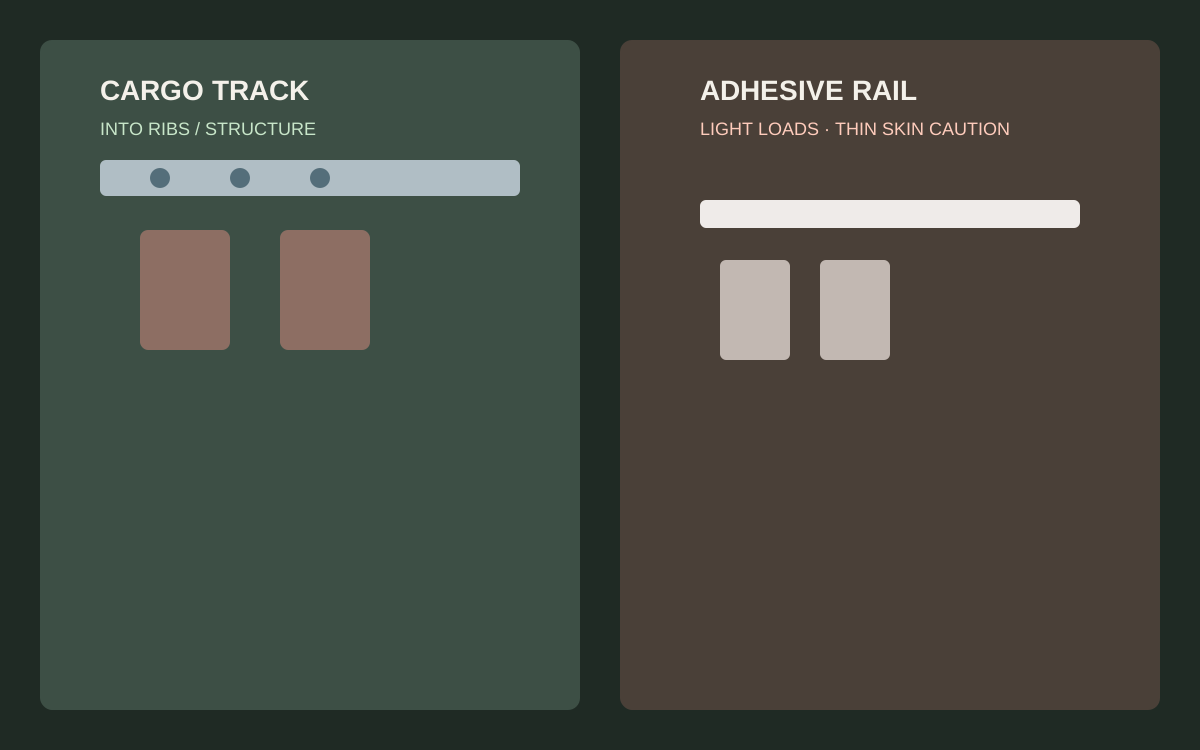
Under $50 on van walls, cargo track (and similar L-track / airline-track rails) usually wins for anything that swings, straps, or rides washboard miles — when you can fasten into ribs or blocking. Adhesive rails usually win only for light soft goods on smooth, cool panels after full cure. Thin skins, textured vinyl, and hollow decorative panels are not stud walls; treat them as fragile substrates and never judge capacity from a pack sketch.
Compare cargo track and adhesive van rails on Amazon
Who this is for
- Van and campervan builders choosing a wall rail system under $50
- Travel trailer owners comparing sticky rails with mechanical track
- Anyone who already hit thin-wall substrate limits with adhesive hooks
Quick answer
Under $50 on van walls, cargo track (and similar L-track / airline-track rails) usually wins for anything that swings, straps, or rides washboard miles — when you can fasten into ribs or blocking. Adhesive rails usually win only for light soft goods on smooth, cool panels after full cure. Thin skins, textured vinyl, and hollow decorative panels are not stud walls; treat them as fragile substrates and never judge capacity from a pack sketch.
Quick comparison
| Factor | Cargo track | Adhesive rails | Edge |
|---|---|---|---|
| Daily yank / strap loads | Usually $20–$50 into structure | Bonds fail with heat and shock | Cargo track wins |
| Light soft goods on smooth panels | Usually overkill if loads stay light | Best after full cure on ideal surfaces | Adhesive wins |
| Thin skins / vinyl wallpaper | Only with proper backing — never through skin alone | Risky; often peels or scars finish | Caution both |
| Resale / rental clean removal | Usually leaves fastener holes to patch | Cleaner when used as directed | Adhesive if loads allow |
What to look for
Thin-wall substrate caution
Many van “walls” are thin luan, vinyl-covered paneling, or fiberglass skins over foam. Screwing only into the skin can crack, leak, or void warranties. Find ribs, wood blocking, or run cargo track into real structure.
Vibration derates adhesive
Heat-cycled vans and highway miles shrink adhesive ratings far below box claims. Proof with light loads first and confirm the weight rating.
Match the hang motion
A soft pouch may suit an adhesive rail. Strapped bags, cook kits, and tool pouches belong on track fittings into structure.
Removal and resale
Adhesive can leave walls cleaner when removed as directed. Track holes into structure are often acceptable if you own the build and patch thoughtfully.
Clear winner criteria
Choose cargo track when…
The load straps, swings, or rides rough roads; you can hit ribs or blocking; or you want modular fittings you can move later. This is the default for real travel gear under $50 when structure exists.
Choose adhesive rails when…
The load is light and static, the panel is smooth and cool, you can wait full cure time, and clean removal matters more than travel toughness.
Choose a hybrid when…
Use adhesive rails for temporary light clutter while you map structure, then migrate permanent hangers to short track sections once the aisle plan settles.
Side-by-side van realities
Failure mode
Adhesive often peels slowly in summer heat, then dumps everything on a bump. Undersized screws in skin alone crack panels; track into structure usually flexes before failing.
Temperature and texture
Textured vinyl and cold nights are hostile to adhesive. Mechanical track shrugs those off when installed into real backing.
Cost per hang point
Cheap adhesive multipacks look cheaper until a failure scars paneling. A short length of track and a few fittings often costs less over a season.
Treat price bands as moving targets
Lengths and claimed capacities change with sales. Check the current ratings, surface guidance, and price on the listing before you buy.
How to decide under $50
Map the substrate first
Tap for ribs, use a stud finder where wood exists, or plan short cargo-track runs. If you only feel hollow skin, do not treat it like a garage stud wall.
Weigh the item and the pull
If you would not trust a sticky note with that motion on a washboard road, do not trust adhesive rails.
Plan removal or resale day
If zero holes matter and loads stay light, stay adhesive. If you own the build, track into structure for anything you need every night.
Buy for the hardest hang on that rail
Never average a light hat and a dense tool pouch onto one adhesive strip.
Mistakes to avoid
- Driving long screws through thin fiberglass skin into unknown voids.
- Trusting garage adhesive ratings in a heat-soaked, vibrating van.
- Hanging cast cookware or fully loaded bags on adhesive rails.
- Skipping alcohol prep on cooking-film-covered galley panels.
- Assuming any metal rail equals a safe mount without finding structure.
Related guides
Browse the hub: RV & camping storage under $50 - all guides
- Adhesive vs Screw-In Hooks for RV Walls Under $50
- How to Organize a Van Aisle with Collapsible Wall Pockets Under $50
- Best RV Wall Organizers Under $50 (Collapsible)
FAQ
Which wins under $50 — cargo track or adhesive rails?
Cargo track usually wins for travel loads when you can fasten into ribs or blocking. Adhesive rails win only for light soft goods on ideal panels after full cure.
Why is thin-wall substrate a caution?
Many van panels are thin decorative skins over foam or hollow cavities. Screws that only bite the skin can crack, leak, or fail. Find structure or use purpose track systems.
Can I mix both on one wall?
Yes. Keep adhesive for light soft goods on proven panels; put mechanical track on the travel-critical zone.
Is L-track the same as cargo track?
Related family of slotted rails with fittings. Measure fitting compatibility; never assume cross-brand fit.
Bottom line
Under $50 on van walls, cargo track wins for real travel loads into structure; adhesive rails win only for light soft goods on ideal panels. Respect thin substrates, derate for vibration, then check the current ratings on the listing before you buy.