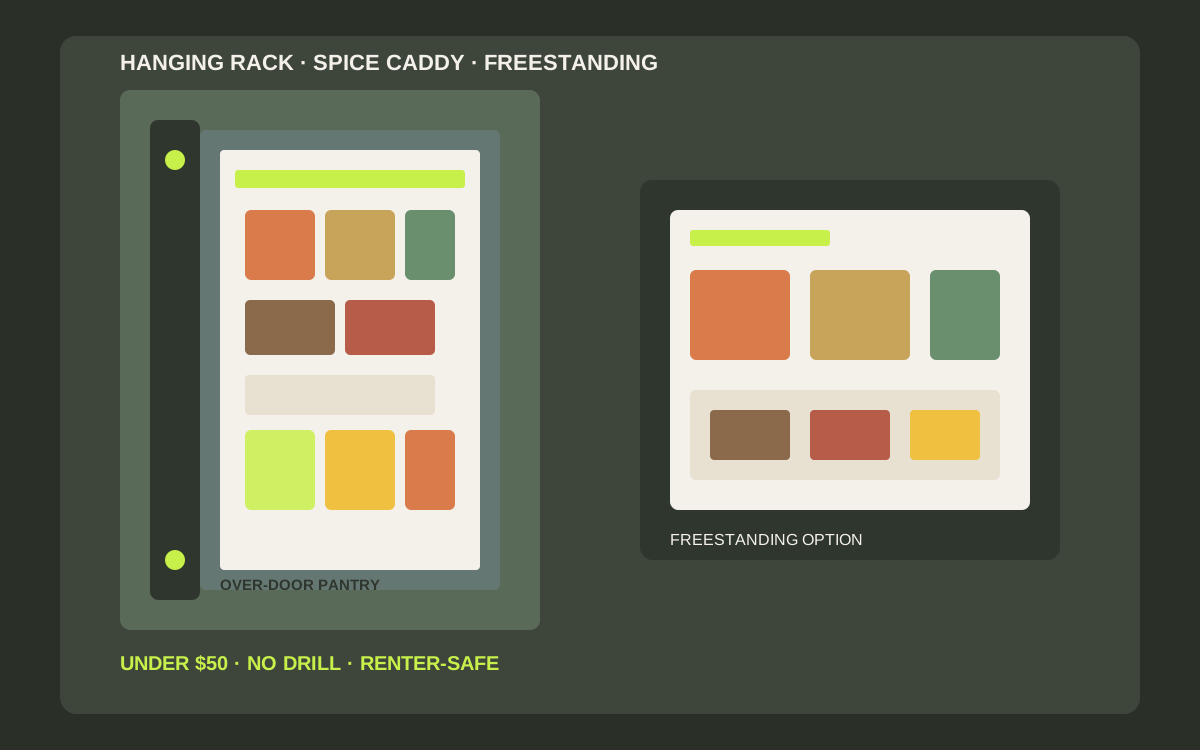
For most apartments, the best under-$50 pantry upgrade is a hanging over-door rack sized to your door thickness and clearance — no drill, fast install, and easy move-out. Choose a freestanding mini pantry cabinet only when the door cannot take load or you need deeper shelves that do not swing. Keep can and jar weight honest, check soft-close or bumper quality so doors do not rattle, and check the current price bands on the listing before you buy.
Shop over-door pantry organizers on Amazon
Who this is for
- Renters who need pantry space without drilling cabinets or buying a full freestanding unit
- Apartment cooks comparing hanging over-door racks with small freestanding pantry cabinets under $50
- Anyone storing cans, jars, spices, or wraps on a kitchen or closet door and needing honest weight limits
Quick answer
For most apartments, the best under-$50 pantry upgrade is a hanging over-door rack sized to your door thickness and clearance — no drill, fast install, and easy move-out. Choose a freestanding mini pantry cabinet only when the door cannot take load or you need deeper shelves that do not swing. Keep can and jar weight honest, check soft-close or bumper quality so doors do not rattle, and check the current price bands on the listing before you buy.
Quick comparison
| Format | Best for | Typical price band | Why it wins |
|---|---|---|---|
| Hanging over-door pantry rack | Kitchen or closet doors with clearance | Usually $15–$40 | Fastest no-drill pantry win |
| Over-door spice / wrap caddy | Narrow doors, lighter packets & spices | Usually $12–$30 | Low weight; easy move-out |
| Pocket / fabric over-door pantry | Dry goods, snacks, lightweight jars | Usually $10–$25 | Quiet; watch sag under cans |
| Freestanding mini pantry cabinet | No door clearance or heavy can loads | Usually $30–$50 | Deeper shelves; uses floor space |
What to look for
Door clearance and thickness fit
Over-door hooks need headroom above the door and a fit for your door thickness — hollow-core apartment doors are thinner than many solid doors. Measure the gap to the frame when the door is closed; a thick rack that scrapes drywall or blocks the latch is a fail. Confirm the hook depth matches your door before you load cans.
Weight honesty for cans, jars, and bottles
Cans and glass jars stack weight fast. Prefer metal or sturdy polymer shelves with clear maker guidance over flimsy décor pockets meant for packets. Distribute heavy items low and centered; never infer a rating from a product photo. If you need a wall of full #10 cans, that is a freestanding or stud-mount problem, not a light over-door rack.
Soft-close, bumpers, and rattle control
Apartment doors slam and neighbors notice. Look for soft bumpers on hooks, padded contact points, and shelves that do not chatter when the door moves. Soft-close hinges on freestanding cabinets are a plus when the unit sits near a walkway — loose metal-on-metal racks turn every close into noise.
Renter removal and surface safety
Hanging racks should lift off without screws. Wipe paint contact points and use felt or foam if the kit does not include bumpers. On move-out, empty shelves first, then lift the hooks straight up so nothing gouges the top edge of the door.
Hanging over-door racks vs freestanding pantry cabinets
When the hanging rack wins
If you have a standard interior door with clearance at the top and a path that does not scrape the frame, a hanging over-door pantry rack is usually the best under-$50 pick: zero holes, minutes to install, and the whole unit leaves with you. Kitchen pantry doors and hall closet doors both work when thickness and swing clear.
When freestanding makes more sense
Skip the door if your unit has ultra-thin doors, zero top clearance, a door that already scrapes carpet, or you plan to park dense can stacks. A compact freestanding pantry cabinet under $50 keeps weight on the floor and deeper shelves available — trade floor footprint for stability.
Kitchen door vs closet door
Kitchen doors put spices and wraps near cooking; closet doors hide bulk snacks and backup cans. Heat and steam near ovens can soften some plastics and adhesives on light caddies — metal or thicker polymer shelves handle kitchen doors better. Closet doors are quieter for fabric pocket styles.
Mixed setups that stay under $50
Many renters pair a slim over-door spice rack with a small freestanding cube for heavy cans. That split keeps swing weight low and still beats buying a tall cabinet you cannot move later.
How to choose the right capacity
Measure door thickness and top clearance first
Hook depth and headroom decide fit more than shelf count. Measure with the door closed so you see real frame clearance. Note latch side clearance too — deep shelves can hit walls on a 90° open.
Match shelf depth to what you store
Spice jars and wrap boxes need shallow ledges; soup cans need deeper trays with a front lip. Fabric pockets suit snacks and light packets, not rows of glass pasta sauce.
Prefer bumpers and stable shelves
Soft bumpers protect paint; rigid shelves with lips reduce spill risk when the door swings. Soft-close on freestanding units is a nice apartment courtesy, not a must for hanging racks.
Treat under-$50 bands as moving targets
Check the current dimensions, ratings, and price on the listing before you buy.
Installation that survives rental life
Empty the door path before you hang
Clear the swing arc, check for baseboard hits, and confirm the door still latches with the rack dry-fitted. Adjust hook position if the kit allows so the unit hangs level.
Load light, then prove the swing
Start with spices or wraps. Open and close the door several times. Watch for scrape marks, shelf chatter, and latch binding before you add full can rows.
Keep heavy items low and centered
Top-heavy doors bind hinges and slam harder. Put denser cans on lower shelves and leave the top for light boxes or bags.
Move-out without door scars
Unload completely, lift hooks straight up, and wipe the top edge. Store the rack flat in a moving box — bent hooks are how the next apartment install fails.
Mistakes to avoid
- Buying a thick rack for a door with almost no top clearance to the frame.
- Loading full glass jars on a fabric pocket organizer meant for light snacks.
- Ignoring latch and wall scrape when the door opens 90°.
- Skipping bumpers on painted hollow-core doors that scuff easily.
- Expecting a $20 hanging rack to replace a stud-mounted pantry for bulk #10 cans.
- Leaving the rack full on moving day and yanking it off the door edge.
Related guides
Browse the hub: No-drill apartment storage under $50 - all guides
- Best Over-the-Door Organizers for Apartments Under $50
- Best Over-Door Shoe Organizers for Apartments Under $50
- Best Command Hooks for Apartment Storage Under $50 (No Drill)
FAQ
What is the best over-door pantry organizer for apartments under $50?
A hanging over-door rack that fits your door thickness and clearance is usually the best under-$50 default. Use a freestanding mini pantry when the door cannot take load or you need deeper shelves for heavy cans.
Will an over-door pantry rack hold cans and jars?
Many metal or sturdy polymer racks can hold moderate can and jar loads when you follow the maker’s guidance and keep weight low and centered. Fabric pocket styles are better for snacks and light packets — confirm the weight rating first.
Do over-door pantry organizers damage rental doors?
Usually not if they hang with soft bumpers and you lift them straight off on move-out. Scrapes come from missing pads, overloading, or forcing a rack that is too thick for the door gap.
Should I use a kitchen door or a closet door?
Kitchen doors win for spices and wraps near cooking; closet doors hide bulk snacks. Avoid soft plastics that sit in direct oven heat, and keep swing noise in mind for shared walls.
When should I buy a freestanding pantry instead?
Choose freestanding when door clearance is gone, hinges feel weak, or you need deep shelves for dense cans. Under $50, expect a compact cabinet — verify live dimensions and price.
Bottom line
Over-door pantry organizers under $50 earn their keep when the format matches the door: hanging racks for clearance-friendly kitchen or closet doors, spice caddies for light loads, fabric pockets for quiet snack storage, and freestanding mini cabinets when weight or clearance says stay off the door. Measure thickness and headroom, keep can weight honest, use bumpers, and remove gently on move-out. Check the current ratings and price on the listing before you buy.