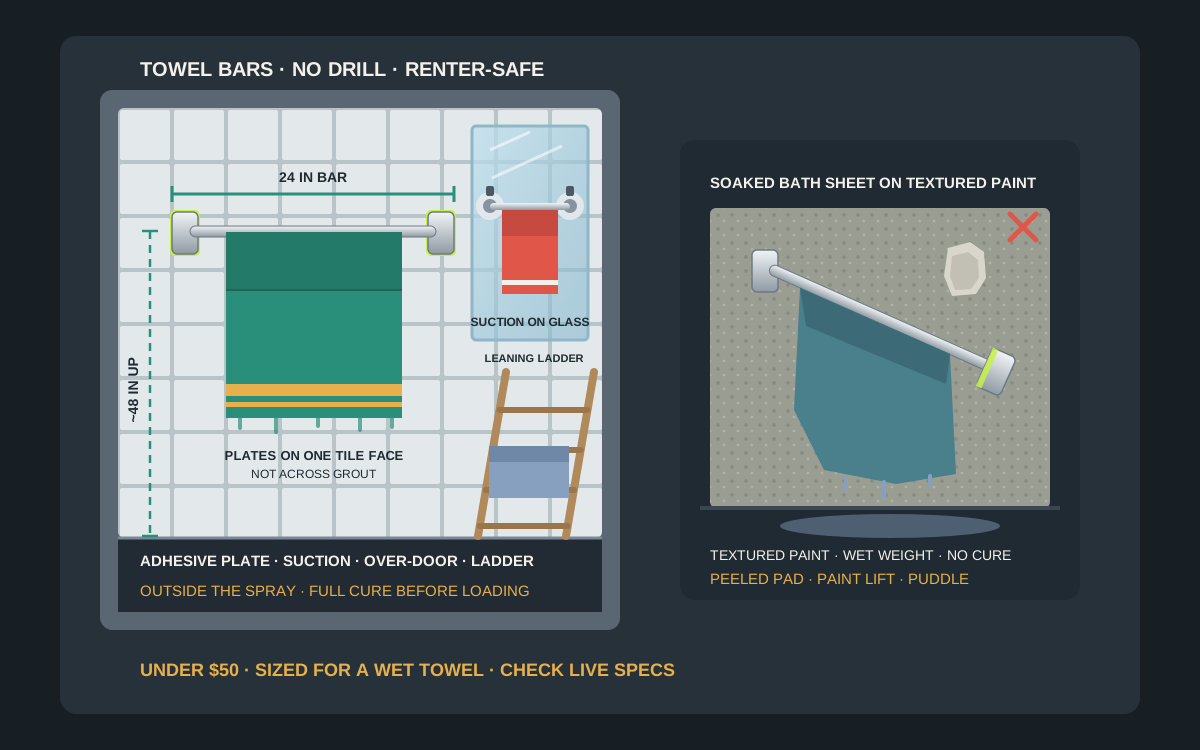
For most apartments, the best under-$50 no-drill towel bar is a 24-inch adhesive-plate bar (stick-on end brackets with the bar clipped or screwed into them) on smooth glazed tile, mounted around 48 inches up and outside the direct shower spray, then left alone for the full adhesive cure before the first wet towel. Choose a locking suction bar for glass or mirror, an over-door bar when no wall is good enough, and a freestanding towel ladder when the only free wall is textured or freshly painted drywall, or when you hang heavy bath sheets. Size the load to a soaked towel, not a dry one, never use any of these as a grab bar, and check the current ratings, dimensions and price on the listing before you buy.
Shop no-drill towel bars on Amazon
Who this is for
- Renters who want a real full-length bath-towel bar without drilling tile or losing part of the deposit
- Apartment bathrooms where the original bar is missing, too short for two people, or mounted somewhere useless
- Anyone deciding between a stick-on bar, a suction bar on glass, an over-door bar, hooks, or a leaning towel ladder under $50
Quick answer
For most apartments, the best under-$50 no-drill towel bar is a 24-inch adhesive-plate bar (stick-on end brackets with the bar clipped or screwed into them) on smooth glazed tile, mounted around 48 inches up and outside the direct shower spray, then left alone for the full adhesive cure before the first wet towel. Choose a locking suction bar for glass or mirror, an over-door bar when no wall is good enough, and a freestanding towel ladder when the only free wall is textured or freshly painted drywall, or when you hang heavy bath sheets. Size the load to a soaked towel, not a dry one, never use any of these as a grab bar, and check the current ratings, dimensions and price on the listing before you buy.
Quick comparison
| Format | Best for | Typical price band | Why it wins |
|---|---|---|---|
| Adhesive-plate towel bars | Smooth glazed tile beside the tub or vanity | Often $15–$40 | Real bar length and finish, zero holes |
| Locking suction-cup bars | Glass, mirror, polished non-porous tile | Often $12–$30 | Re-seatable, no residue, easy to move |
| Over-door / over-shower-door bars | Bathroom doors or framed shower doors with clearance | Often $12–$35 | No wall contact at all |
| Freestanding / leaning towel ladders | Textured paint, bath sheets, two-towel households | Often $25–$50 | Heavy wet towels with no adhesive risk |
| Adhesive bath hooks (pair) | Narrow walls, kids, quick hand-towel spots | Often $8–$20 | Cheapest and smallest, but towels dry slower |
Adhesive-plate towel barsSuction-cup towel barsFreestanding towel ladders
What to look for
Wet-towel weight, not dry-towel weight
A typical cotton bath towel weighs roughly 1 to 1.5 lb dry, and right after a shower it can easily carry two to three times that in water. Two damp towels on one bar plus the tug of pulling one off in a hurry is the real load. Weigh your own towel wet on a bathroom or kitchen scale, compare it with the maker’s published rating for your surface, and keep a margin. If no rating is published for tile or for bathrooms, treat that as a no.
A surface the adhesive can actually grip
Glazed ceramic or porcelain tile, glass and smooth enamel give adhesive and suction the best shot. Semi-gloss bathroom paint over drywall is a maybe; flat, textured, peeling or week-old paint is a no, because the bond is only as strong as the paint layer it is stuck to. Unsealed stone, wallpaper, vinyl panels and grout lines under the pad all cut the real contact area.
Bar length and projection that fit the towel
An 18-inch bar suits hand towels or one folded bath towel; 24 inches is the usual sweet spot for one bath towel folded in thirds; around 30 inches or longer is where two towels side by side, or a bath sheet, start to dry properly. Projection matters too: a bar that sits a couple of inches off the wall lets air get behind the towel so it dries instead of pressing a wet patch against the paint.
Removal method you will actually be able to do on move-out
Stretch-release strips come off by pulling the tab slowly, straight down along the wall. Acrylic foam (VHB-style) tape holds harder but has to be warmed and sawed through with floss or fishing line. Kits that rely on a curing glue or silicone dot are semi-permanent: fine on your own tile, risky on a landlord’s paint. Know which one you are buying before it goes up.
Bar vs suction vs over-door vs ladder vs hooks
When an adhesive-plate towel bar wins
If there is a stretch of glazed tile beside the tub or vanity, outside the shower spray, a stick-on bar is the closest thing to the real installed fixture. The best designs separate the wall plate from the bar: you stick the two plates, let them cure, then clip or screw the bar in afterwards, so you never press on the bar itself while the adhesive is green. Look for plates large enough to sit on one tile face without bridging a grout line, and a bar that can be removed from the plates for cleaning and for move-out.
When a locking suction bar is smarter
Suction bars belong on glass, mirror and polished, non-porous tile: surfaces where a flat cup can seal completely. Lever-lock or twist-lock cups hold far better than plain push cups, but every suction mount slowly loses vacuum with temperature swings and steam, so plan to release and re-seat it every few weeks. They are a poor match for textured tile, frosted or patterned glass, grout lines and any painted wall, and they are best used for one hand towel or a lighter bath towel rather than a soaked bath sheet.
When over-door or over-shower-door bars make sense
If every wall is wrong, use the door. An over-door towel bar or multi-rail hanger hooks over the top of the bathroom door and carries towels with no adhesive at all; check the hook depth against your door thickness and that the door still closes against the frame without rubbing. Over-shower-door bars hook over the top rail of a framed glass door; confirm the hook fits the rail profile and that it does not stop the door sealing. Our over-door towel rack guide, linked below, goes deeper on door-mounted options.
When a freestanding towel ladder beats glue
A leaning ladder or a freestanding towel stand under $50 is the right answer for textured or flat-painted walls, for bath sheets, and for households where three or four towels need to dry every morning. It costs floor space instead of wall space, so measure: most leaning ladders want around a foot of floor depth. Put rubber feet on tile, keep it away from the door swing, and if there are small kids or pets, use an anti-tip strap or choose a weighted-base stand.
When a pair of hooks is enough
Bath-rated adhesive hooks are the cheapest and smallest option, and two hooks at different heights work well for kids or for a narrow wall beside the sink. The trade-off is drying: a towel bunched on a hook stays damp much longer than one spread over a bar, which means mustier towels and more moisture held against the wall. Hooks are a good supplement to a bar, not a replacement for the main bath towel.
Surface prep: tile vs painted drywall vs glass
Glazed tile: the best no-drill surface
Scrub soap scum off with a bathroom cleaner first, rinse, then wipe the exact spot with isopropyl rubbing alcohol and let it dry completely. Do not use cleaners that leave a slick film (some all-in-one sprays, oily wipes) as the final step. Mark the bar height with painter’s tape and a level, and position each end plate so it sits fully on one tile face; a plate straddling a grout joint loses much of its bond line and peels from the low side.
Painted drywall: semi-gloss only, and old paint only
Adhesive on paint only holds as well as the paint holds to the wall. Semi-gloss or satin bathroom paint that has cured for at least a week is a workable surface for a light bar; flat or matte paint, textured finishes, chalky or peeling paint, and paint that was rolled the week you moved in are not. Clean with alcohol the same way, and accept a lower load: one bath towel, not two plus a robe. If the towel will hang against the wall, check the spot for mildew every few weeks.
Glass and mirror: suction first, adhesive rarely
Glass gives suction cups a perfect seal, so a locking suction bar is usually the right tool there. Clean with glass cleaner, then alcohol, and seat the cups on dry glass at room temperature. Avoid sticking permanent adhesive plates to a shower door or mirror you do not own; residue on glass is removable, but some mirror backings and coatings are not as forgiving as tile.
Steam, humidity and cure time
Bathrooms are the hardest room in an apartment for adhesive: heat, steam and condensation all attack a bond that has not finished curing. Many acrylic foam tapes reach most of their strength within about 24 hours and full strength around 72 hours at room temperature, and most kits ask you to wait before loading. Stick plates when the room is dry and not cold, run the fan, skip hot showers in that bathroom for the cure window if you can, and hang a dry towel first. Treat the maker’s cure time as the minimum.
How to choose the right capacity
Weigh your wettest towel
Hang the heaviest towel you own after a shower, let it drip for a minute, and weigh it. That number, doubled if two towels share the bar, is the figure to compare with the listing. Thick plush towels and bath sheets are where adhesive bars fail first.
Check the rating for your surface, not the best case
A rating measured on glass or polished tile does not transfer to painted drywall. Look for a rating stated for your surface and for bathroom use, and when a listing gives one number with no context, assume it is the best-case figure.
Measure the wall, the door swing and the shower spray
Measure the free wall width, then open the bathroom door and the shower door or curtain fully. The bar should sit where a towel is reachable from the tub or shower, the door handle cannot hit it, and the spray does not hit the plates directly every day.
Treat under-$50 price bands as moving targets
Listings change constantly. Verify live dimensions, finishes, ratings and price before ordering; this guide uses Amazon search links instead of picking SKUs we cannot verify.
Installation that survives daily showers
Dry-fit and level before anything sticks
Use painter’s tape to mark the plate positions, check level across the full bar length, and dry-fit the bar into the plates if the design allows. Around 48 inches from the floor is a common towel bar height; go a little lower for kids or a little higher above a vanity backsplash.
Press hard, then leave it alone
Peel the liner, place each plate once, and press firmly for the time the maker specifies, usually around 30 seconds, with even pressure across the whole plate. Do not slide or re-stick a plate. Then fit the bar only when the kit allows it, and wait for the full cure before the first wet towel.
Load in stages
Start with a dry hand towel for the first day or two and watch the top edge of each plate for any gap. Then move to one bath towel. Only add a second towel once the bar has shown no creep after a week of normal showers.
Keep the plates dry and clean
Wipe soap film and splashes off the plates during your normal bathroom clean. Water sitting along the top edge of a plate, day after day, is what slowly works under the bond.
Damage-free removal on move-out
Unload and remove the bar first
Take towels off and detach the bar from the plates so you are only dealing with the plates. Never pry a plate off by levering on the bar; that turns the bar into a crowbar against the tile or paint.
Stretch-release strips: pull slowly, straight down
Hold the plate lightly and pull the tab slowly, straight down along the wall, stretching it as far as it will go. Pulling the tab outward, toward you, is how strips snap and paint tears.
Foam tape: warm, saw, then roll off the residue
Warm the plate with a hair dryer for a minute, slide dental floss or fishing line behind it and saw through the foam. On tile, roll leftover residue off with your thumb or use a citrus-based adhesive remover, then clean with alcohol. On paint, skip solvents and go slower with warmth and thumb-rolling.
Suction and over-door bars: release and wipe
Flip the locking levers, lift the cup edge, and wipe any ring off the glass. Over-door bars just lift off; check the top of the door for scuffs and use the foam or felt bumpers the kit came with from day one.
Mistakes to avoid
- Using a towel bar of any kind as a grab bar. Even screwed-in towel bars are not built to support a person; a renter who needs one should ask the landlord for a properly anchored grab bar.
- Sizing the bar to a dry towel and then hanging a soaked bath sheet and a robe on it.
- Sticking plates across a grout line, on textured or flat paint, or on paint that is only days old.
- Loading the bar before the adhesive has cured, or installing it in a cold, steamy bathroom right after a shower.
- Mounting the plates where the shower spray hits them every day, or where the door handle swings into the bar.
- Pulling stretch-release tabs outward instead of straight down, or prying plates off with the bar on move-out.
- Buying glue-cure "punch-free" kits for a landlord’s painted wall without realizing they are semi-permanent.
Related guides
Browse the hub: no-drill apartment storage under $50 - all guides
- Best No-Drill Towel Ring Wall Mounts for Apartments Under $50
- Best Over-Door Towel Racks for Apartment Bathrooms Under $50
- Best Over-the-Toilet Storage for Apartments Under $50 (No Drill)
- Best Adhesive Shower Caddy Alternatives for Renters Under $50
- Best No-Drill Bathroom Corner Shelves for Apartments Under $50
- Best No-Drill Toothbrush & Razor Holders for Apartment Bathrooms Under $50
- Best Command Hooks for Apartment Storage Under $50 (No Drill)
FAQ
What is the best no-drill towel bar for apartments under $50?
For most renters, a 24-inch adhesive-plate towel bar on smooth glazed tile, mounted outside the shower spray and left for the full cure before loading. Use a locking suction bar on glass, an over-door bar when no wall is suitable, and a freestanding towel ladder for textured paint or bath sheets.
How much weight does a no-drill towel bar need to hold?
Plan for wet towels. A cotton bath towel that weighs about 1 to 1.5 lb dry can weigh two to three times that after a shower, so two damp towels plus the tug of pulling one off is the real load. Weigh your own towel wet and compare it with the maker’s rating for your surface.
Can I stick a towel bar to painted drywall, or only to tile?
Tile is far safer. Semi-gloss paint that has cured at least a week can carry a light bar with one towel, but flat, textured, peeling or fresh paint will fail, often taking paint with it. If the only free wall is like that, choose an over-door bar or a freestanding ladder instead.
How long should the adhesive cure before the first shower?
Follow the maker’s cure time as a minimum. Many acrylic foam tapes reach most of their strength within about 24 hours and full strength around 72 hours at room temperature, so install in a dry, warm room, keep steam away during the cure if you can, and start with a dry hand towel.
How do I remove an adhesive towel bar without damaging tile or paint?
Take the bar off the plates first. Pull stretch-release tabs slowly straight down along the wall; for foam tape, warm the plate with a hair dryer, saw through it with floss or fishing line, and roll the residue off. Use a citrus remover on tile only, never harsh solvents on paint.
Bottom line
No-drill towel bars under $50 work when the surface, the wet-towel load and the cure time all line up: an adhesive-plate bar on clean glazed tile outside the spray, a locking suction bar on glass, an over-door bar when the walls are wrong, and a freestanding ladder for textured paint, bath sheets or a whole family’s towels. Weigh a soaked towel, keep plates off grout and fresh paint, let the bond cure before the first shower, never treat a towel bar as a grab bar, and remove the bar before the plates on move-out. Verify live ratings, dimensions and price on the listing before you buy.