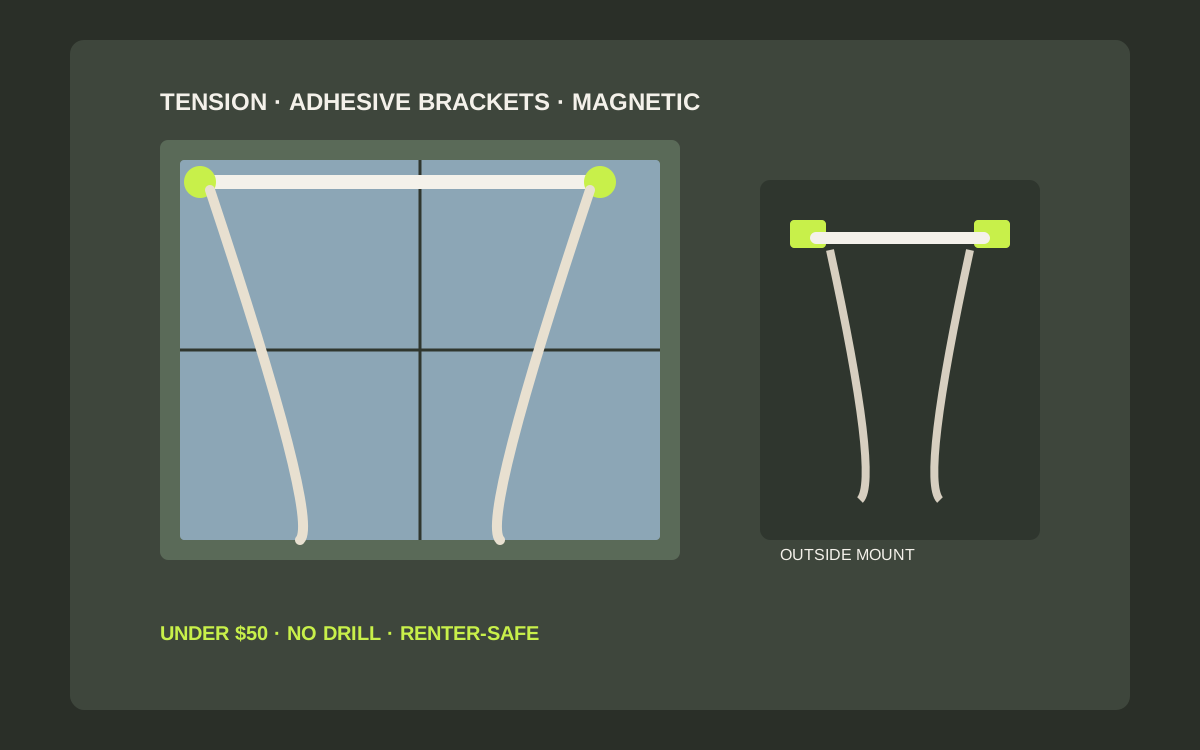
For most apartments, the best under-$50 no-drill curtain rod is a spring tension rod sized to the narrowest inside-mount recess — simple, landlord-friendly, and fast. Choose a rated adhesive/no-drill bracket kit when you want an outside-mount look on smooth paint and can wait the full cure time. Magnetic rods only belong on true metal frames; wrap-around tension styles suit narrow light panels. Keep blackout weight honest, measure width carefully, and confirm the load rating on the listing.
Shop no-drill curtain rods on Amazon
Who this is for
- Renters who need privacy or light control without drilling window frames or drywall
- Apartment dwellers comparing tension rods, adhesive bracket kits, and magnetic options under $50
- Anyone matching curtain weight (sheer vs blackout) to honest no-drill hardware limits
Quick answer
For most apartments, the best under-$50 no-drill curtain rod is a spring tension rod sized to the narrowest inside-mount recess — simple, landlord-friendly, and fast. Choose a rated adhesive/no-drill bracket kit when you want an outside-mount look on smooth paint and can wait the full cure time. Magnetic rods only belong on true metal frames; wrap-around tension styles suit narrow light panels. Keep blackout weight honest, measure width carefully, and confirm the load rating on the listing.
Quick comparison
| Format | Best for | Typical price band | Why it wins |
|---|---|---|---|
| Spring tension rod (inside mount) | Recessed windows, light/sheer panels | Usually $10–$30 | Fastest renter default |
| Adhesive / no-drill bracket kit (outside mount) | Wider look on smooth paint | Usually $20–$45 | Cure-time discipline required |
| Magnetic rod (metal frames only) | Steel window frames or metal trim | Usually $15–$40 | Fails on wood/vinyl/drywall |
| Wrap-around / wrap tension styles | Narrow spans, light privacy panels | Usually $15–$35 | Snug fit; light fabric only |
What to look for
Blackout vs sheer weight honesty
Sheers and light unlined panels are the sweet spot for tension rods and most adhesive kits. Dense double blackout sets can exceed what a spring rod or décor adhesive will hold — if panels feel heavy in your hands, prefer a clearly rated kit or ask the landlord about screws. Never infer a rating from a product photo.
Window-width sizing (and recess depth)
For inside-mount tension rods, measure the narrowest point of the jamb at install height and pick a rod whose adjustable range covers that width with margin — edge-of-range hope is how paint cracks. For outside-mount brackets, measure wall span plus curtain stack-back so fabric clears the glass when open.
End-cap and surface damage risk
Soft rubber end caps on sound wood or solid jambs usually leave little mark if you do not over-expand. Soft, crumbling, or freshly painted jambs scar easily — stop if the surface compresses oddly. Adhesive kits need smooth, clean walls; textured or peeling paint is the wrong surface class.
Cure time and landlord-friendly removal
Adhesive brackets fail most often when someone hangs fabric the same afternoon. Follow the maker’s full cure window before the rod or curtains go on. On move-out, support the rod while releasing tension or stretch-release tabs so nothing crashes into the sill — yanking sideways scars paint.
Which format wins for your window
Spring tension rods for inside-mount recessed windows
If the window sits in a solid jamb recess, a spring tension rod is usually the best under-$50 pick: no adhesive cure, no screws, and removal is a controlled twist-down. Confirm the adjustable range covers your measured width and that end caps are soft enough for rental paint.
Adhesive / no-drill bracket kits for outside-mount looks
Outside-mount rods make rooms feel taller and hide more light bleed at the edges — but they need clean smooth walls, level marks, and the full adhesive cure before load. Treat “holds up to X lb” as a live listing claim to verify, not a number we can promise here.
Magnetic rods only when the frame is truly metal
Magnetic curtain rods cling to steel frames and some metal trim. They do nothing useful on wood, vinyl, drywall, or most aluminum-clad apartment windows that are not magnetic. Test with a fridge magnet first.
Wrap-around and wrap tension styles for narrow light jobs
Wrap-around or twist-fit tension styles can work on narrow spans with light panels when you want fabric to hug the sides for privacy. They are not a magic upgrade for heavy blackout pairs — weight honesty still rules.
How to choose the right capacity
Match fabric weight before you shop
Hold both panels; if they feel like a winter coat, a light spring rod is the wrong tool class. Prefer lighter unlined or single-layer blackout alternatives when you must stay no-drill.
Prefer adjustable ranges with real margin
Buy a rod that covers your measured width in the middle of its range, not at the last thread of expansion. Over-expanding punches dents into rental jambs and still slips later.
Plan rings, clips, and stack-back
Clip rings and wrap rings change how freely fabric slides. Leave clearance so curtains do not scrape blinds, window AC units, or doors when fully open.
Treat price bands as moving targets
Check the current dimensions, ratings, and price on the listing before you buy.
Installation that survives rental life
Measure twice at install height
Jambs are not always parallel. For tension rods, use the narrowest width. For adhesive brackets, mark level points with painter’s tape before you commit.
Clean, dry, then wait
Alcohol-wipe adhesive contact zones and let them dry fully. After brackets go on, wait the full cure time before the rod or fabric — skipping this step is the #1 peel failure.
Proof with one light panel first
Dry-fit the rod, then hang one lightweight panel and operate it open/closed. Watch for sag, slip, end-cap creep, or bracket lift before you add the second panel.
Move-out without paint scars
Support the rod while you release tension or stretch-release tabs. Pull adhesive slowly along the wall plane; sideways yanks take paint with them.
Mistakes to avoid
- Buying a rod shorter than the recess and cranking until paint cracks.
- Hanging dense double blackout drapes on a light tension rod or décor adhesive kit.
- Skipping adhesive cure time and loading the rod the same afternoon.
- Assuming a “magnetic” rod will stick to wood, vinyl, or non-magnetic aluminum frames.
- Blocking window AC vents or emergency egress with stacked fabric.
- Yanking brackets off sideways on move-out day.
Related guides
Browse the hub: No-drill apartment storage under $50 - all guides
- How to Hang Curtains in an Apartment Without Drilling Under $50
- Best Tension Rod Shelves for Apartment Closets Under $50
- Best Command Hooks for Apartment Storage Under $50 (No Drill)
FAQ
What is the best no-drill curtain rod for apartments under $50?
A spring tension rod sized to the narrowest inside-mount recess is usually the best under-$50 default for light or sheer panels. Use a rated adhesive bracket kit for outside-mount looks on smooth paint, and keep blackout weight within the hardware’s guidance.
Can no-drill rods hold blackout curtains?
Sometimes with lighter single-layer blackout panels and a clearly rated kit. Dense double blackout sets often need stronger, landlord-approved mounts — never overload a light spring rod.
Will a tension rod damage rental window frames?
Soft end caps on sound jambs usually leave little mark if you do not over-expand. Soft, crumbling, or fresh paint scars more easily — stop if the jamb compresses oddly.
How long should adhesive curtain brackets cure?
Follow the maker’s full cure window before adding the rod or curtains. Most peel failures come from loading too soon, not from the bracket format itself.
When should I use a magnetic curtain rod?
Only on truly magnetic metal frames or trim. Test with a fridge magnet first — most wood, vinyl, and many aluminum apartment frames will not hold.
Bottom line
No-drill curtain rods under $50 earn their keep when the format matches the window: spring tension for inside-mount recesses, adhesive brackets for outside-mount looks with full cure time, magnets only on real steel, and wrap styles for narrow light panels. Keep blackout weight honest, size the width with margin, and remove hardware gently on move-out. Check the current ratings and price on the listing before you buy.