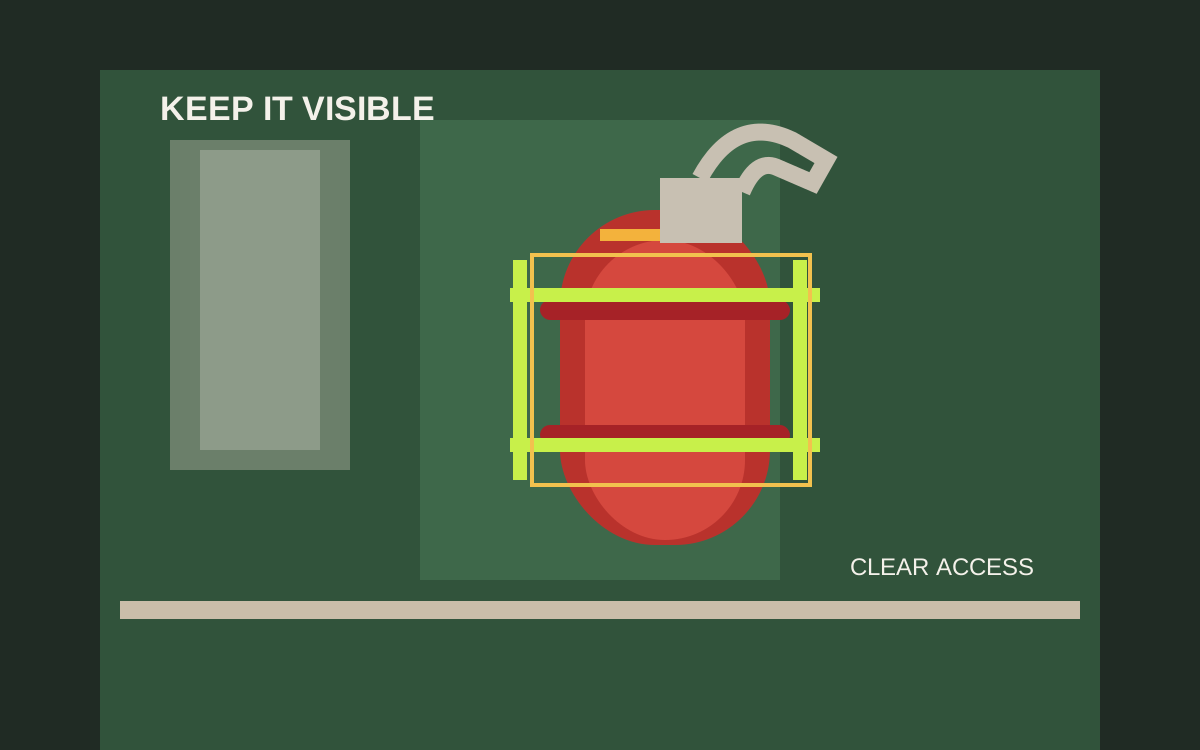
The best under-$50 garage mount is the one that holds the exact extinguisher size you own, keeps the handle and pin visible, and releases quickly without a key or fiddly latch. For most home garages, a steel strap or cradle bracket screwed into a stud is the practical choice; use a cabinet when impact, dust, or weather exposure is a real concern.
Shop garage fire extinguisher mounts on Amazon
Who this is for
- Homeowners who want the extinguisher visible and off the floor
- Garages with a workbench, utility area, or attached-house entry nearby
- Anyone deciding between an open bracket and a protective wall cabinet
Quick answer
The best under-$50 garage mount is the one that holds the exact extinguisher size you own, keeps the handle and pin visible, and releases quickly without a key or fiddly latch. For most home garages, a steel strap or cradle bracket screwed into a stud is the practical choice; use a cabinet when impact, dust, or weather exposure is a real concern.
Quick comparison
| Format | Best for | Typical price band | Why it wins |
|---|---|---|---|
| Open steel strap bracket | Most attached garages and utility walls | Usually $15-$30 | Fast access and easy visual inspection |
| Cradle bracket with lower shelf | Bumped or high-traffic garage walls | Usually $20-$40 | Supports the cylinder instead of hanging it by the neck |
| Protective wall cabinet | Dust, impact, or shared workshop areas | Usually $30-$50 | Adds a barrier while keeping the extinguisher visible |
| Two-point heavy-duty bracket | Larger units or rougher environments | Usually $25-$45 | Reduces sway with upper and lower retention |
What to look for
Fit the extinguisher, not the category
Check the extinguisher diameter, height, and handle clearance against the mount dimensions. “Fits most” is not a measurement. The cylinder should sit securely without rubbing the hose, pin, gauge, or safety seal.
Retention must not slow access
A strap or cradle should keep the cylinder from tipping when the wall is bumped, while still releasing in one deliberate motion. Avoid a mount that requires a key, tools, or an awkward lift over a high lip.
Mount to a sound surface
A loaded extinguisher is heavier than an empty bracket suggests. Prefer a stud or solid masonry. If you must use drywall, follow the anchor manufacturer’s rating and mount only where the wall can handle repeated handling.
Protect visibility and inspection
Do not hide the pressure gauge, inspection tag, pin, or hose behind a decorative cover. A cabinet can help in a dusty or busy garage, but it should remain clearly marked and easy to open.
Open bracket or cabinet?
Open strap bracket: best for quick checks
An open bracket keeps the extinguisher visible, lets you read the gauge and inspection tag at a glance, and is usually the easiest option to grab. Look for a strap or shaped cradle that supports the body without crossing the handle, pin, hose, or label.
Cradle bracket: steadier on a busy wall
A lower shelf or contoured cradle is useful when bikes, bins, or tools may bump the wall. It supports the cylinder from below and reduces sway, but it needs more vertical clearance than a simple strap.
Cabinet: protection with a trade-off
A cabinet is worthwhile where the extinguisher collects dust, sits near impact-prone activity, or must be protected from casual knocks. It should not turn a life-safety item into something hidden; choose a clearly marked, tool-free door and keep the front unobstructed.
Placement in a garage
Choose the exit path
Mount the extinguisher on a clear route near the door into the house or the main garage exit, not directly beside the hazard where smoke or flame could block access. You should be able to reach it while still having a way out.
Keep it visible and reachable
A mount around chest height is easier to see and lift for many adults, but the correct height depends on the extinguisher and household users. Do not place it behind a car, tall shelf, hanging bike, or cabinet door.
Separate it from likely heat
Keep the extinguisher away from direct heat, fuel storage, welding sparks, and corrosive chemicals. The mount is for access and protection; it does not make unsafe placement safe.
Inspect after mounting
Check that the gauge, pin, tamper seal, hose, and inspection tag remain visible and undamaged. Follow the extinguisher manufacturer’s inspection and replacement guidance; a wall mount is not a substitute for servicing.
Installation checklist
Confirm the unit
Measure the cylinder and note whether its hose or handle projects to one side. Compare those dimensions with the mount before drilling.
Mark a solid fixing point
Find a stud or choose suitable masonry hardware. Use all required fixing holes; do not rely on a single screw or an adhesive pad for a life-safety item.
Level and test the release
Install the bracket level, place the extinguisher in it, and remove it once to confirm the motion is obvious and unobstructed. Do not disturb the safety pin or seal.
Keep the area clear
Treat the floor and wall in front of the extinguisher as a no-storage zone. Visibility is part of readiness.
Mistakes to avoid
- Choosing a mount by the extinguisher class alone instead of measuring the actual cylinder.
- Putting the extinguisher behind a vehicle, tall shelf, or locked cabinet.
- Using adhesive strips, suction cups, or a weak single-point hook for a life-safety item.
- Covering the gauge, pin, hose, inspection tag, or manufacturer label.
- Treating the mount as proof that the extinguisher is charged, inspected, or still within its service life.
Related guides
Browse the hub: Garage wall storage under $50 - all guides
- Best Garage Wall Organizers Under $50
- Best Narrow Garage Shelving Under $50 for Tight Spaces
- Small Garage Organization Under $50
FAQ
What is the best fire extinguisher wall mount for a garage?
For most home garages, choose a steel strap or cradle bracket that matches the exact extinguisher diameter, mounts to a stud or masonry, and releases without a key. A cabinet is better when impact or dust protection matters.
Should a fire extinguisher be mounted or left on the floor?
Mounting keeps it visible, dry, and away from trip hazards. The mount must not block access, hide the gauge or pin, or place the extinguisher where a fire could cut off your exit.
Can I use drywall anchors for an extinguisher bracket?
Only when the anchor and wall construction are explicitly rated for the loaded unit and repeated handling. A stud or solid masonry is the safer default; never rely on adhesive alone.
Should a garage extinguisher be inside a cabinet?
A cabinet can protect against dust and impact, but it must open quickly without a key and remain clearly marked. Keep the unit visible and follow local fire-safety guidance.
Bottom line
A fire extinguisher mount earns its place by improving access, not by adding decoration. Measure the cylinder, use a real mechanical fixing into a sound wall, keep the handle and gauge visible, and place the unit on an escape route that stays clear. Under $50, a well-fitted open bracket is usually the cleanest answer; choose a cabinet only when it protects without slowing access.