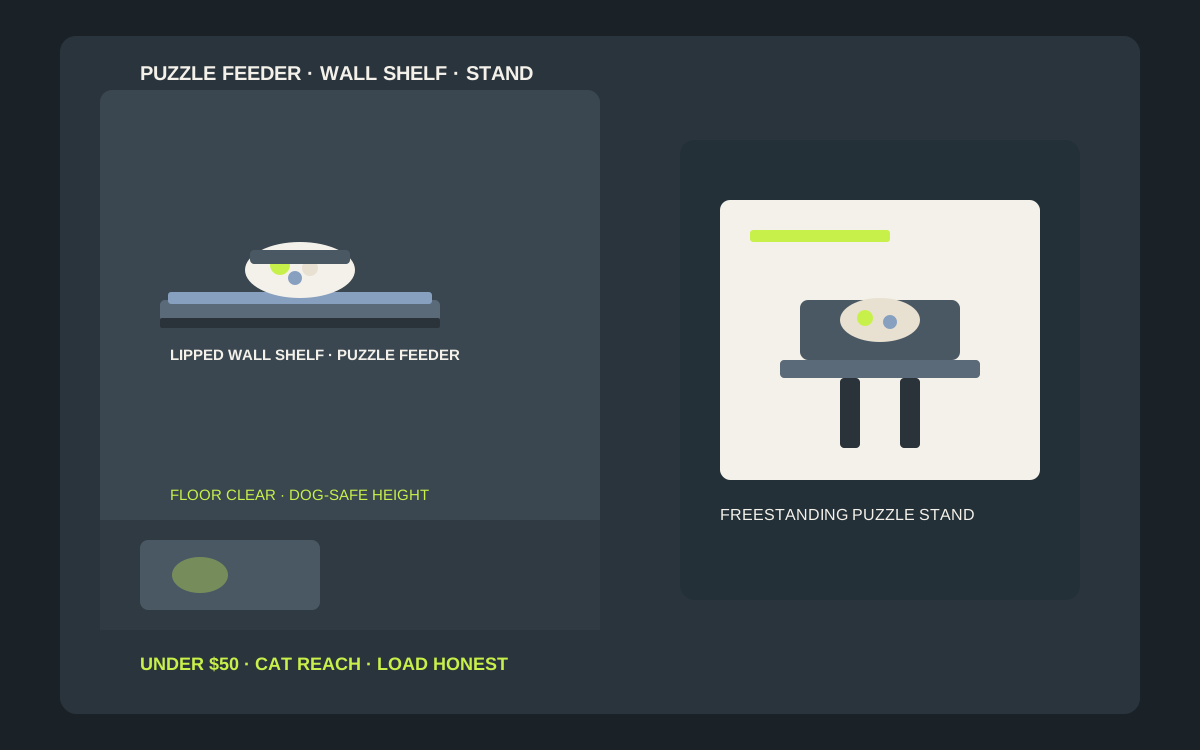
For most homes, the best under-$50 cat food puzzle feeder wall shelf is a lipped floating shelf or sturdy screw-in ledge at true cat-reach height — deep enough for the puzzle base, rated for feeder plus kibble (or wet food) weight, and placed where dogs and toddlers cannot tip it. Adhesive floating shelves win on smooth painted drywall for light dry-food puzzles after a full cure; screw-in shelves or pegboard/slat shelves win when wet food, heavier ceramic puzzles, or weak paint are in play. Freestanding stands still beat wall mounts when walls are textured, humid, or your puzzle stack feels too heavy for décor adhesive. Check the current ratings and price on the listing before you buy.
Shop cat puzzle feeder wall shelves on Amazon
Who this is for
- Cat owners who want puzzle feeders elevated off the floor without tipping or dog raids
- Renters comparing adhesive floating shelves, screw-in ledges, and freestanding puzzle stands under $50
- Anyone managing wet-food mess, kibble scatter, and honest load ratings for feeder plus food weight
Quick answer
For most homes, the best under-$50 cat food puzzle feeder wall shelf is a lipped floating shelf or sturdy screw-in ledge at true cat-reach height — deep enough for the puzzle base, rated for feeder plus kibble (or wet food) weight, and placed where dogs and toddlers cannot tip it. Adhesive floating shelves win on smooth painted drywall for light dry-food puzzles after a full cure; screw-in shelves or pegboard/slat shelves win when wet food, heavier ceramic puzzles, or weak paint are in play. Freestanding stands still beat wall mounts when walls are textured, humid, or your puzzle stack feels too heavy for décor adhesive. Check the current ratings and price on the listing before you buy.
Quick comparison
| Format | Best for | Typical price band | Why it wins |
|---|---|---|---|
| Adhesive floating shelf | Light dry-food puzzles on smooth paint | Usually $12–$35 | Fastest no-drill win after full cure |
| Screw-in wall shelf / ledge | Heavier puzzles, wet food, honest load | Usually $15–$40 | Studs or solid anchors; best tip resistance |
| Freestanding puzzle stand | Weak paint, renters, heavy ceramic bowls | Usually $18–$45 | Zero wall risk; watch dog tip risk |
| Pegboard / slat shelf insert | Existing pegboard or slatwall pet zone | Usually $10–$30 | Reconfigurable; confirm shelf depth |
What to look for
Load honesty: feeder + kibble (or wet food)
A puzzle feeder is not a phone on a décor ledge. Factor the empty feeder weight plus a full portion of dry kibble or a wet-food tray. Prefer shelves with clear maker guidance for painted drywall or studs, wait any adhesive cure window, and treat thin décor shelves as light-duty until you prove otherwise. Never assume two ratings add up.
Cat reach vs tip and knock-off risk
Mount at a height your cat can comfortably eat from without jumping onto a narrow ledge edge. Leave a lip or non-slip pad so batting paws do not shove the puzzle off. Skip placements over stairs, glass, or where a knocked bowl becomes a slip hazard.
Wet vs dry food mess and cleanability
Dry puzzles scatter kibble; wet puzzles drip. Prefer lipped shelves, wipeable surfaces, and enough clearance under the shelf to mop. Avoid fabric liners under wet food. Keep the shelf away from fabric curtains and soft bedding that soak grease.
Renter-safe mounts and wall finish
Adhesive pads on smooth paint remove with a slow pull after you unload the feeder. Screw-in shelves into studs or solid anchors are more honest for heavier puzzles but leave holes. Freestanding stands or tension options leave zero wall scars when paint is weak or freshly done.
Wall shelf vs freestanding vs adhesive ledge
When adhesive floating shelves win
If you have smooth painted drywall, a light plastic or silicone dry-food puzzle, and room for a lipped shelf deep enough for the feeder base, an adhesive floating shelf is usually the best under-$50 pick: minutes to install, no holes, and the whole setup leaves with you on move-out — after a full adhesive cure and honest load check.
When screw-in wall shelves are smarter
Choose a screw-in ledge when wet food, ceramic puzzles, or multi-portion feeders push the weight past décor glue comfort. Hit studs when you can, or use solid anchors rated by the maker. A front lip or raised edge dramatically cuts tip and knock-off risk from batting paws.
When freestanding stands beat wall mounts
Skip wall mounts if walls are textured, humid, freshly painted, or your puzzle-plus-food stack feels too heavy for adhesive. A compact freestanding puzzle stand or elevated feeder frame under $50 keeps weight off the paint — just place it where dogs cannot shove it and cats can still eat comfortably.
When pegboard or slat shelves make sense
If you already run a pegboard or slatwall pet zone for scoops and leashes, a matching shelf insert can hold a light puzzle feeder beside the food station. Confirm depth and load guidance for the insert — pegboard shelves vary widely, and a shallow décor shelf is the wrong home for a wide puzzle base.
How to choose the right capacity
Measure puzzle footprint and shelf depth
Note the feeder base diameter or length, plus any spill tray. A shallow ledge that looks fine empty may leave the puzzle overhanging once food is added.
Plan height for your cat — not Instagram
Dry-fit so the cat eats with a natural neck angle, not a stretch jump onto a narrow edge. Multi-cat homes may need two heights or a floor option for seniors.
Separate food zone from litter and water splash
Keep puzzle shelves away from litter boxes and high-splash water bowls. Grease and ammonia odors on a shelf discourage eating and make cleanup worse.
Treat under-$50 bands as moving targets
Check the current dimensions, ratings, and price on the listing before you buy.
Installation that survives real cat life
Clean, dry, smooth paint for adhesive
Wipe dust and oils, stick only to smooth painted drywall (not popcorn or heavy texture), and follow the maker’s cure window before you set the feeder.
Dry-fit with the loaded puzzle mock-placed
Hold the shelf at eating height with the puzzle and a bag of kibble (or a wet tray weight stand-in) mock-placed. Confirm lip clearance, paw access, and that dogs cannot casually tip the setup.
Load light, then add a full portion
After cure (adhesive) or after screws are snug, start with an empty feeder, then a half portion. Watch for slow peel or shelf flex over the first day before running full wet-food meals.
Move-out or rehang without wall scars
Unload the feeder first. Warm-strip adhesive pads per the maker’s method, or fill screw holes if you used hardware. Do not pry a loaded shelf off painted drywall.
Mistakes to avoid
- Parking a heavy ceramic wet-food puzzle on décor adhesive without maker guidance or a full cure.
- Mounting so high the cat must jump onto a narrow ledge edge — tip and fall risk rises fast.
- Ignoring dog or toddler tip risk on freestanding stands left in a hallway traffic path.
- Using a fabric-lined shelf under wet food that soaks grease and never cleans fully.
- Sticking to popcorn, heavy texture, humid exterior walls, or week-old paint.
- Expecting one thin floating ledge to hold a wide puzzle base plus spill tray without a lip.
Related guides
Browse the hub: pet gear wall mounts under $50 - all guides
- Best Pet Water Fountain Wall Shelves Under $50
- How to Mount a Wall Pet Feeding Station Under $50
- Best Pet Food Scoop Wall Holders Under $50
- Best Cat Tree Wall Shelves Under $50
FAQ
What is the best cat food puzzle feeder wall shelf under $50?
A lipped floating shelf or sturdy screw-in ledge at true cat-reach height is usually the best under-$50 default for elevating puzzle feeders. Choose adhesive on smooth paint for light dry puzzles; choose screw-in or freestanding when wet food, ceramics, or weak walls are involved.
Will an adhesive shelf hold a puzzle feeder plus a full portion of food?
Sometimes for light dry-food puzzles on smooth painted drywall after a full cure and within maker guidance. Wet food and dense ceramic puzzles often need screw-in shelves or freestanding stands — never assume two ratings add up; check the current ratings.
How high should a cat puzzle feeder shelf sit?
At a comfortable eating height for your cat — typically where they can reach the puzzle without leaping onto a narrow edge. Senior or short-legged cats need lower mounts; keep dogs and toddlers from tipping freestanding options.
Are wall shelves better than freestanding puzzle stands?
Wall shelves free floor space and can reduce dog raids when mounted above dog reach. Freestanding stands win when walls are weak, renters forbid holes, or the puzzle load exceeds adhesive comfort. Match the format to wall quality and load honesty.
Will removing an adhesive shelf damage rental paint?
Usually not if you unload the feeder first and follow the maker’s slow-pull instructions. Damage comes from yanking loaded shelves or sticking to weak, fresh, or textured paint.
Bottom line
Cat food puzzle feeder wall shelves under $50 earn their keep when load, height, and mess match real cat life: adhesive floating shelves for light dry puzzles on smooth paint, screw-in lipped ledges for heavier or wet-food setups, pegboard inserts when you already have a pet wall system, and freestanding stands when paint or weight says stay off the wall. Cure adhesive, respect tip risk, keep the shelf wipeable, unload before removal, and check the current ratings and price on the listing before you buy.